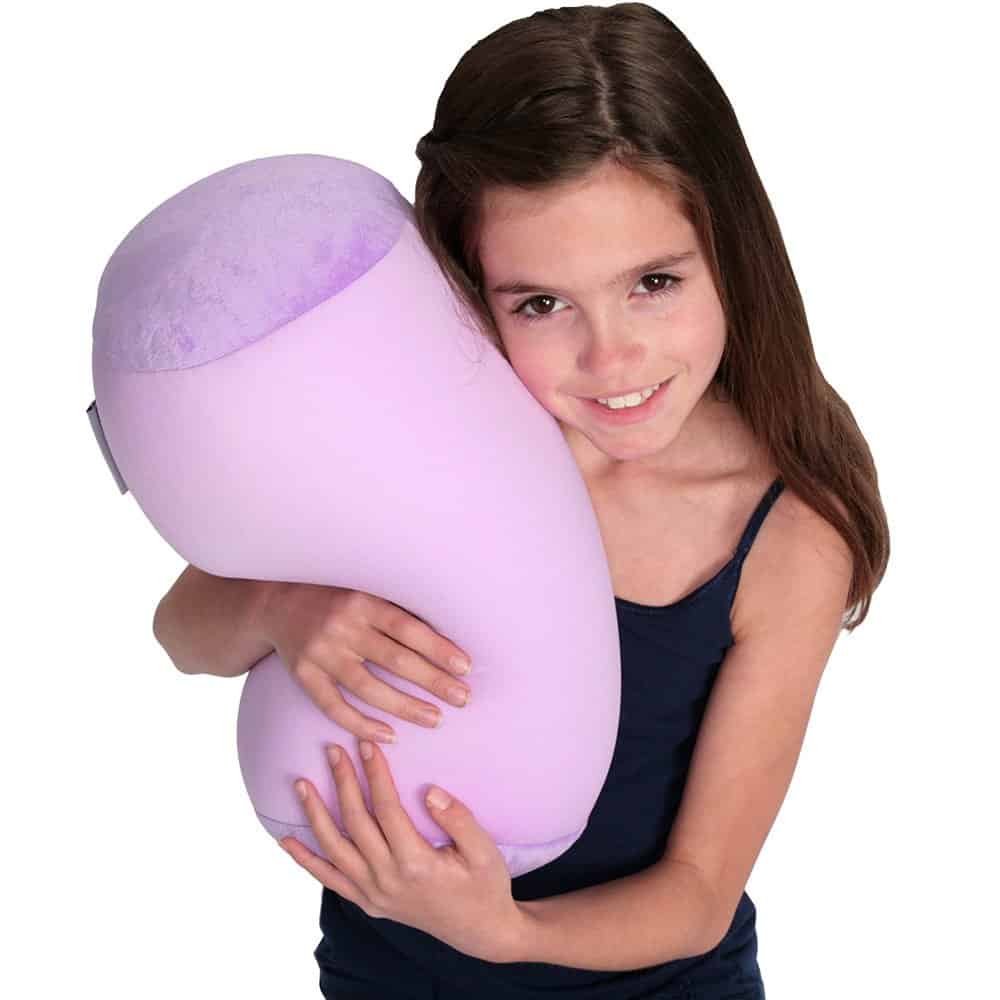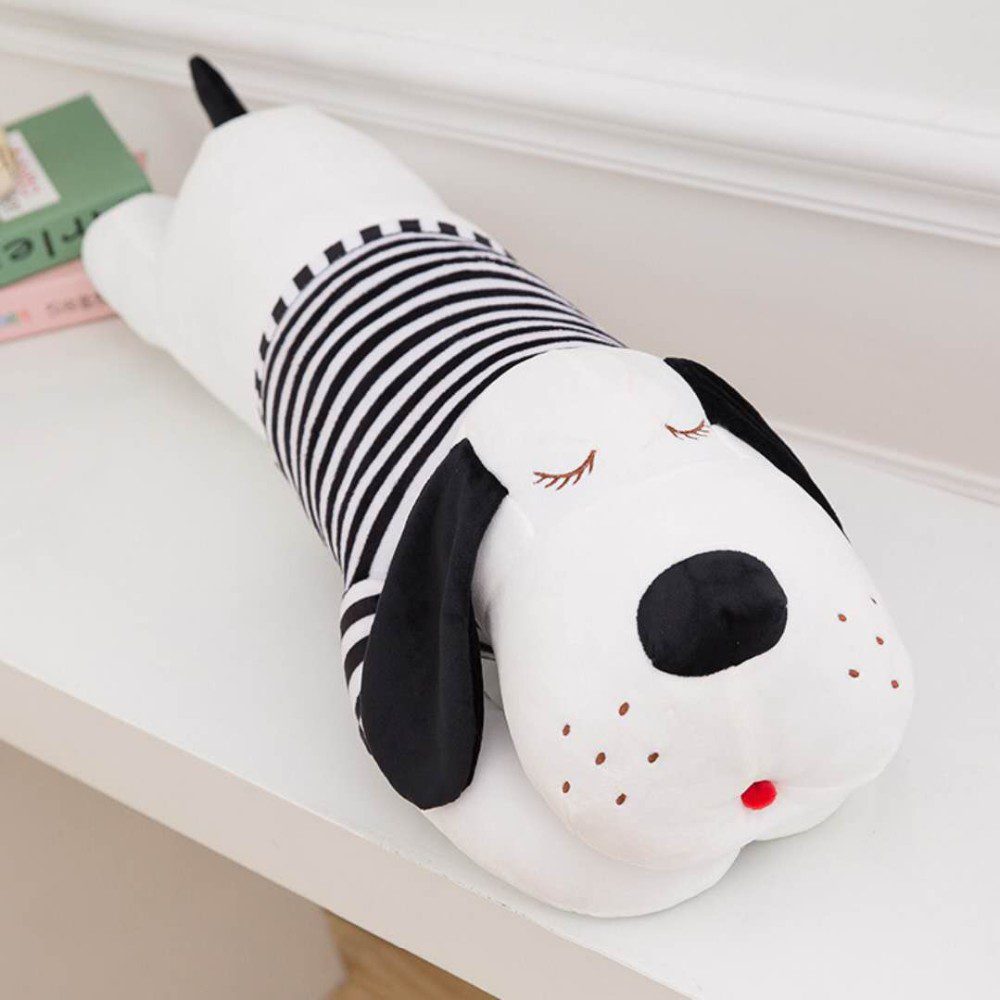
What child doesn’t like to cuddle up at nap time or during their night time sleep with a pillow stuffed animal?
These unique designs in the world of soft toys, make sleeping on a pillow stuffed animal almost no different than sleeping on a conventional one.
The beauty, however, is that you get to both sleep and wake up with your treasured best friend and companion right there beside you.
The history of pillows is a long one; they date back as far as ancient Egypt and Mesopotamia – Iraq as we know it today.
In pharaoh’s tombs, head rests have been found which show that early versions of them were strictly reserved for the wealthy, but, they were anything but cushy; most of them were made of solid wood and were curved or curved slightly in the middle.
Chinese dynasties used jade, bronze, wood, porcelain, and bamboo for pillows for more than a millennium. They were often shaped liked and decorated with pictures of plants, humans, animals, and geometric figures.
Hard pillows were a preference simply because the Chinese believed that anything soft would take away vitality from the body.
They were also of the belief that soft pillows would contribute to poor blood circulation and prevent unwanted demons from staying away.
In Greece and Rome, the wealthy could be found using pillows made of softer substances such as straw, feathered down, and reeds.
In medieval Europe, embroidered cushions and pillows were quite fashionable as is evidence in various manuscripts according to the author of A Brief History of the Pillow in Europe, Cherie Fehrman.
By the time the 16th century rolled around, pillows were much more common but due to mold and vermin, their stuffing had to be frequently changed and the cases washed.
At that time, pillows were often taken to church so they could be kneeled on.
By the same token, Bibles were often placed on pillows of their own. Most of what we know today in terms of bedding was created in the 19th century but didn’t go on to mass production until the 20th century.
It’s certainly not a far cry from the first creation of plush toys that the pillow stuffed animal would soon follow.
In fact, plush toys that were never even designed as pillows can be used in that way regardless, simply because of their softness and pliability.
Given the close attachment most children have with their soft toys, it’s no wonder they love nothing more than to sleep on them given the opportunity; with a pillow stuffed animal, they can do that anytime they want.
Related: best mattresses of 2026
Related: top mattress brands compared
Related: best pillows for side sleepers
Related: cooling vs regular pillow
Related: best RV mattress
Related: best cooling mattresses
Related: how your mattress affects your body
Related: best mattresses for side sleepers
Choosing the Right Pillow for Your Sleep Style
Your pillow choice should complement your mattress and sleeping position to create a sleep system that keeps your spine in proper alignment from head to toe. Side sleepers generally need a thicker, firmer pillow (5-7 inches of loft) to fill the space between the shoulder and ear, keeping the neck and head aligned with the spine. Back sleepers typically perform best with a medium-loft pillow (3-5 inches) that supports the natural curve of the cervical spine without pushing the head too far forward. Stomach sleepers need the thinnest pillow possible (or no pillow at all) to prevent neck hyperextension that can lead to chronic pain and stiffness. If you change positions throughout the night, an adjustable-fill pillow that allows you to customize the loft offers the most versatile solution.
How Often Should You Replace Your Pillow?
Pillows accumulate dust mites, dead skin cells, body oils, and moisture over time, creating an increasingly unhygienic sleep surface that can exacerbate allergies and respiratory issues. Most sleep experts recommend replacing pillows every 1-3 years, depending on the fill material: synthetic fiber pillows have the shortest effective lifespan (12-18 months), down and feather pillows last 2-3 years with proper care, memory foam pillows maintain their properties for 2-3 years, and latex pillows can perform well for 3-4 years. A quick freshness test: if your pillow has a persistent odor even after washing, shows visible yellow staining that penetrates through the protector, or no longer springs back when folded in half, it is time for a replacement. Investing in a quality pillow protector and washing your pillowcase weekly can extend the useful life of any pillow by reducing the accumulation of contaminants that break down materials over time.