Table of Contents
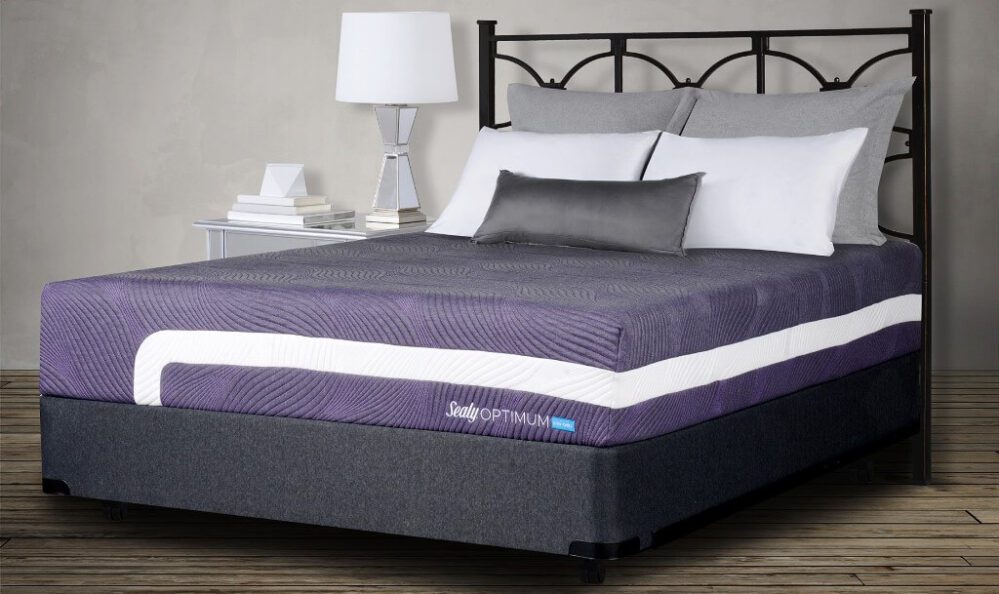
For most adults, ideal mattress-top height is 24 to 26 inches above the floor — feet flat when sitting on the edge, easy to get in and out of. Headboards should extend 20 to 30 inches above the mattress top for comfortable back-rest while reading. For a standard 11-inch mattress, that means a headboard with total height of 44 to 56 inches. Thicker mattresses (14″+) and taller foundations require proportionally taller headboards to maintain visual balance. Always check ceiling clearance — the top of the headboard needs at least 12 inches of wall space above it.
The Total Bed Height Formula
Total bed height = frame height + foundation height + mattress height. Each component adds inches. The target is the mattress top sitting 24 to 26 inches above the floor for average-height adults — the same height as a standard chair. This positions feet flat on the floor when sitting on the bed edge, which prevents back strain when putting on shoes or getting up in the morning.
Modern mattresses are thicker than ever — luxury pillow-tops routinely reach 14 to 16 inches, compared to 8 to 10 inches in prior generations. When paired with traditional box springs and bed frames, total bed height can exceed 30 inches, making the bed uncomfortable to mount for average and shorter sleepers. Meanwhile, platform beds and low-profile foundations offer smarter height management. Getting the math right upfront avoids the frustration of an awkwardly tall bed.
Height Targets by Sleeper
| Sleeper Profile | Ideal Mattress-Top Height | Common Issue If Wrong |
|---|---|---|
| Elderly (70+) | 18–22 inches | Fall risk if too tall |
| Mobility-limited adults | 20–23 inches | Difficult entry/exit |
| Average adult (5’4″–5’10”) | 24–26 inches | Back strain if too tall |
| Tall adult (6’+) | 26–29 inches | Knee strain if too low |
| Children (age 6+) | 18–22 inches | Fall risk without guards |
Component Heights by Type
Understand what each piece adds. Standard metal bed frame: 4–8 inches. Platform bed (built-in support): 8–18 inches (varies widely). Foundation / box spring: 5–9 inches. Low-profile foundation: 4–5 inches. Adjustable base: 12–15 inches (collapsed) to 18+ inches. Mattress: 8–16 inches depending on style. Adding them tells you the total.
Example Builds
Low-profile modern: 4″ metal frame + 5″ low-profile foundation + 11″ mattress = 20 inches total.
Standard traditional: 6″ metal frame + 9″ box spring + 11″ mattress = 26 inches total.
Tall luxury: 7″ frame + 9″ foundation + 14″ pillow-top mattress = 30 inches total.


Platform bed modern: 12″ platform bed + 11″ mattress = 23 inches total.
Adjustable wellness: 14″ adjustable base + 11″ mattress = 25 inches total (flat).
If your chosen mattress is a luxury pillow-top at 14–16 inches, pair it with a low-profile foundation (4–5 inches) to keep total height in the 24–26 inch sweet spot. Conversely, a thin 8-inch mattress might need a standard 9-inch foundation plus a taller frame to reach comfortable entry height. Foundation choice compensates for mattress thickness.
Headboard Math
Headboard height refers to the distance from the floor to the top of the headboard. The functional measurement is how much of the headboard is visible above the mattress top — this is what you lean against when reading. Ideal visible headboard: 20 to 30 inches above the mattress for comfortable reading position; less for modern minimalist styles.
The Formula
Required headboard total height = mattress-top height + desired headboard projection above mattress. Example: mattress-top is 26 inches above floor, you want 24 inches of headboard visible above the mattress, so headboard total height = 26 + 24 = 50 inches.
Headboard Heights by Style
| Style | Total Height | Above Mattress | Best For |
|---|---|---|---|
| Low Platform | 28–36 inches | 4–12 inches | Modern minimalist |
| Standard | 44–52 inches | 18–28 inches | Traditional bedroom |
| Tall | 52–64 inches | 26–38 inches | Reading, luxury |
| Upholstered Statement | 60–72+ inches | 34–46+ inches | Design-forward rooms |
| Wingback / Canopy | 60–84 inches | 34–58 inches | Formal, spacious rooms |
Ceiling Clearance Rules
Every headboard needs at least 12 inches of wall clearance above its top — otherwise, the room feels cramped and the bed looks squeezed. For a standard 8-foot (96-inch) ceiling, the maximum reasonable headboard total height is about 72 inches. For 9-foot ceilings, 80 inches works. For 10-foot ceilings, 84+ inches creates a dramatic statement. Measure from floor to ceiling before buying any tall headboard.
Bed Skirt and Frame Coverage
Traditional bed skirts cover the space from the top of the box spring down to the floor, hiding the frame and any storage. For modern low-profile beds, skirts look out of place — replace with just a fitted sheet and a decorative coverlet. For platform beds with storage drawers, no skirt is possible (and none is needed — the integrated drawers are the design feature).
- Luxury 14″ mattress on tall bed frame = 30+ inch total (too high for most)
- Thin mattress on low platform = 17″ total (uncomfortably low for adults)
- Headboard with only 8 inches above mattress (not enough to lean against)
- Tall headboard in low-ceiling room (visually crushes the space)
- Mismatched mattress thickness changes with no foundation adjustment
- Ignoring bedroom doorway clearance when moving beds in and out
Doorway Clearance for Moving
Consider the move-in scenario too. Standard bedroom doorways are 30–32 inches wide. Queen bed frames (60″ × 80″) tilt through these doorways at an angle; king frames (76″ × 80″) often need to be broken down into components. If you’re buying a fully-assembled platform bed or bed frame, confirm it disassembles or will fit through the doorway. Inflatable and boxed mattresses (memory foam) solve the delivery side, but the bed frame still needs to fit.
Adjustable Base Height Nuances
Adjustable bases collapse flat when the head and foot are down, but still add 12–15 inches of base height. When articulated (head or foot raised), the mattress top moves upward. Account for this: if you sleep in a head-up position 30 degrees up, the pillow area sits 8–12 inches higher than flat. Check that your headboard accommodates that motion — wall-mounted headboards with freestanding adjustable bases work best because the base doesn’t touch the headboard mechanically.
Wall-Mounted Headboards: The Modern Solution
Increasingly popular: headboards mounted directly to the wall behind the bed, not attached to the bed frame. Advantages: compatible with any bed frame or adjustable base, height fully adjustable at installation, no creaking from frame-headboard joints, easier to change bed frames without replacing the headboard. Mount height: bottom of headboard 2–4 inches above mattress top, creating a small gap that prevents sheet catching. Cost: $150–$800 for quality upholstered panels.
Footboards and Bench Considerations
Traditional four-post beds include a footboard. Modern bedroom design often skips the footboard in favor of a storage bench or open floor. If using a footboard, it should sit 6–12 inches above the mattress top — high enough to be visible, low enough not to interfere with foot space for tall sleepers. Footboards higher than 12 inches above mattress can make the bed feel like a box.
- Mattress-top height 24–26″ for average adults (18–22″ for elderly)
- Headboard projects 20–30″ above mattress for comfortable reading
- Ceiling clearance ≥ 12″ above headboard top
- Doorway width confirmed for all components
- Bed frame leg height + foundation + mattress = target total
- Footboard (if used) ≤ 12″ above mattress top
Special Case: Canopy and Four-Poster Beds
Canopy beds and four-posters require 10-foot ceilings for proper proportion, and posts 72–84 inches tall. In an 8-foot-ceiling room, the canopy crushes the space visually. Alternative: half-canopy (posts only at the head) for ambiance without the ceiling conflict. Pick a bedroom with sufficient ceiling before committing to tall poster styles.
Kids’ Beds: Different Math
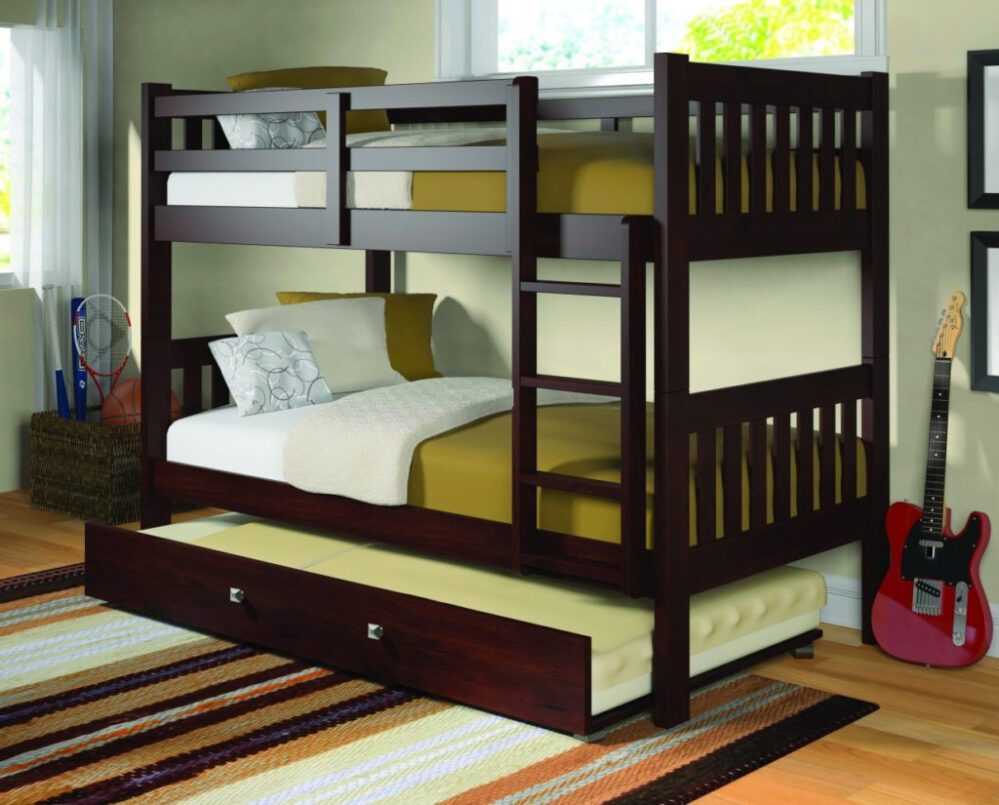
For children, total bed height matters for safety. Toddlers (2–4): 10–14 inches so falls don’t injure. Ages 5–10: 14–20 inches, add bed rails to prevent rolling off. Ages 11+: adult-style heights apply. Bunk beds require 72-inch minimum ceiling clearance at the top bunk. Loft beds require similar clearance plus room for the under-bed area function (desk, storage).
The Aesthetic Proportion Rule
A well-proportioned bedroom has the bed’s total visible height (top of mattress or headboard) at roughly 1/3 to 1/2 of wall height. For an 8-foot wall (96 inches), that’s 32–48 inches visible bed. For 9-foot walls, 36–54 inches. Headboard height determines the upper figure; mattress-top height determines the lower. When these fall outside the range, the bed looks either dollhouse-like or dominant.
FAQs
Sit on the edge of the mattress. If your feet dangle or barely touch the floor, the bed is too tall. If your knees rise above your hips, the bed is too short. Feet flat with thighs parallel to the floor = ideal height.
Replace a 9-inch box spring with a 5-inch low-profile foundation (saves 4 inches). Replace a traditional 6-inch frame with a 2-inch or 4-inch platform base. Together, these can drop total height 5–7 inches without replacing the mattress.
Freestanding headboards attached to frames often leave a 1–3 inch gap — normal. Wall-mounted headboards attach directly. If the frame-mounted headboard wobbles against the wall, add self-adhesive felt pads to eliminate noise and wall damage.
For full-width coverage, headboard width = mattress width (e.g., 60″ for queen). Wider designs extend 4–8 inches beyond on each side for drama. Narrower designs (floating panels) can be 48 inches centered behind a queen for a modern minimalist look.
Sometimes. If the adjustable base has brackets for attaching a headboard, yes. If not, the headboard must be wall-mounted separately (since the adjustable base moves). Read spec sheets before buying either component to ensure compatibility.
The magic number for most adults is mattress-top height of 24–26 inches. Calculate backward from there: pick your mattress thickness, then choose foundation height to land in the target range. Headboards should project 20–30 inches above the mattress top for comfortable reading, with 12+ inches of wall clearance above the headboard top. Elderly and mobility-limited sleepers benefit from lower total heights (18–22 inches). Wall-mounted headboards offer the most flexibility for future bed frame changes and adjustable-base upgrades. Get the math right up front, and you’ll enjoy years of comfortable entry, exit, and reading — small details that compound into real sleep quality.