Table of Contents
Quick Answer: Dunlop and Talalay are the two dominant processes for manufacturing latex foam. Dunlop latex — developed in 1929 — is made from 100% natural rubber tree substance poured into a mold in one complete pour, then vulcanized; it settles denser at the bottom and slightly softer at the top. Talalay latex uses a more complex process where the mold is partially filled, vacuumed to expand the foam, flash-frozen, then vulcanized, producing a more uniform cell structure, lighter weight, and slightly softer feel. Dunlop is denser, heavier, and cheaper; Talalay is lighter, more uniform, and more expensive. Both can be 100% natural or blended with synthetic latex.
Why This Matters Today
Latex is the highest-lifespan mattress material available — a quality latex mattress can last 15+ years, double the typical memory foam bed. But not all latex is equal. The Dunlop/Talalay choice influences feel, price, and durability; the natural/synthetic choice influences ecological footprint, allergen profile, and cost; and the blend percentages determine whether a bed marketed as “latex” is actually 30% natural or 100%. Learning the manufacturing vocabulary turns latex shopping from intimidating into engineering.
⚡ TL;DR — Key Takeaways
- Dunlop latex is denser, firmer, and 20-30% cheaper
- Talalay latex is lighter, more uniform, and feels bouncier
- Both share similar 12-15+ year lifespan when 100% natural
- Dunlop wins for support layers and budget-conscious buyers
- Talalay excels in comfort layers and pressure relief for side sleepers
The Raw Material: Hevea Brasiliensis
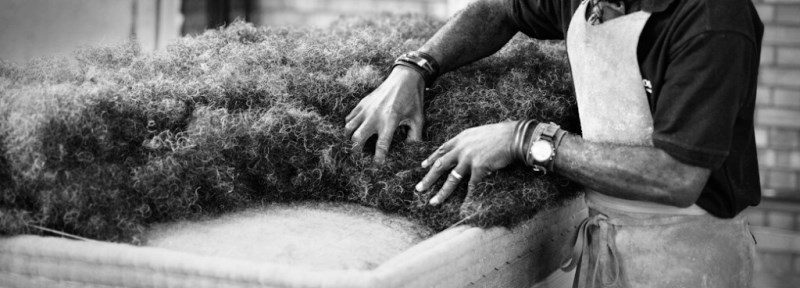
All natural latex begins the same way — harvested as a milky sap from the Hevea brasiliensis rubber tree, native to the Amazon basin but now cultivated across Southeast Asia (Thailand, Indonesia, Malaysia supply the majority). The sap is collected through a tapping process similar to maple syrup extraction and is transported to processing facilities within hours to prevent coagulation. At the factory, the liquid latex is mixed with small amounts of water, foaming agents, gelling agents, and vulcanizing agents (natural soaps and sulfur).
Natural vs Synthetic Latex
Synthetic latex is styrene-butadiene rubber (SBR), a petroleum-derived polymer that mimics natural latex. It is cheaper, more consistent in supply, and less allergenic. Most mattress latex sold as “natural” is a blend of natural and synthetic — truly 100% natural latex commands a significant premium and requires GOLS (Global Organic Latex Standard) certification to verify.
The Dunlop Process: 1929 and Still Dominant
The Dunlop process was developed in 1929 and remains the workhorse of latex manufacturing. The liquid latex mixture is poured into the mold in one complete pour, totally filling the mold cavity. The mixture then settles — meaning the heavier particles sink toward the bottom — which is why Dunlop latex is denser at the bottom and slightly softer at the top. After settling, the mold is heated and vulcanized, curing the latex into its final solid form.
Dunlop Characteristics
Dunlop produces a dense, firm, supportive latex with excellent durability. The natural density gradient (firmer bottom, softer top) is sometimes presented as a feature and sometimes as a defect — it depends on orientation in the finished mattress. Dunlop latex weighs more per cubic foot than Talalay, costs less per board foot, and is the default choice for latex support cores.
The Talalay Process: Complexity for Uniformity
Talalay latex requires five distinct steps beyond the Dunlop base. The mold is partially filled — roughly 50–70 percent — with liquid latex. A vacuum is applied, which expands the foam to fill the mold uniformly and creates a more open cell structure. The expanded foam is flash-frozen to lock the cell structure in place, CO2 gas is introduced to gel the latex, and finally the mold is heated for vulcanization.
🔑 Key Insight: The flash-freezing step is why Talalay latex cannot form a density gradient — the foam is frozen in place before it can settle. This produces uniform feel top-to-bottom but costs more to manufacture.
Side-by-Side Comparison
The two processes produce latex foams that share the same chemistry but differ significantly in feel, weight, price, and ideal application.
| Property | Dunlop | Talalay |
|---|---|---|
| Development year | 1929 | 1940s |
| Density | Higher (denser at bottom) | Lower, uniform |
| Cell structure | Tighter, less uniform | Open, more uniform |
| Feel | Firm, supportive, pushback | Softer, more buoyant, springy |
| Weight per cubic foot | ~5–6 lbs | ~4–5 lbs |
| Breathability | Good | Excellent |
| Price per layer | ~30–40% less | Premium |
| Typical use | Support core, full-firmness layers | Comfort layer, plush feel |
Layered Latex Mattresses
The highest-quality latex mattresses combine both processes — typically a Dunlop support core for firmness and durability topped with a Talalay comfort layer for softer contouring. This layered approach lets manufacturers tune firmness by rearranging layers rather than remaking foams, which is why zipper-access latex beds can offer multiple firmness levels from a single mattress.
The Three-Layer Standard
A common high-end latex stack uses a 6-inch firm Dunlop base, a 3-inch medium Dunlop or Talalay transition, and a 2–3 inch soft Talalay top. Owners can swap the layers to create a firmer or softer feel without buying a new bed — a flexibility unique to latex construction.
Certifications That Verify Latex Claims
Latex marketing uses terms loosely, and certifications are the only reliable way to verify content. Three certifications matter.
✅ Green Flag: GOLS (Global Organic Latex Standard) certifies 95%+ organic natural latex and restricts permitted processing chemicals. Oeko-Tex Standard 100 verifies the finished foam is free of harmful substances. Eco-Institut certifies low VOCs and absence of specific toxins.
The “Natural Latex” Loophole
A product legally labeled “natural latex” can contain as little as 30% natural content in a synthetic-majority blend. Look for specific percentage claims (e.g., “100% natural Talalay latex”) rather than the unqualified phrase.
Durability and Lifespan
Both Dunlop and Talalay deliver exceptional lifespan when made from 100% natural latex. Dunlop latex beds commonly reach 15+ years of use; Talalay slightly less due to the more open cell structure, typically 12–15 years. Synthetic latex and blends drop into the 8–12 year range — still competitive with premium memory foam.
Why Latex Outlasts Foam
Latex is a cross-linked polymer structure that does not rely on mechanical cell integrity the way polyurethane foams do. Cross-linking gives latex an inherent resilience that restores shape after each compression without breaking down polymer chains. This is why latex pillows from the 1970s remain usable today while polyurethane foams of the same era are dust.
🚩 Red Flag: A “latex mattress” priced under $700 in queen is almost certainly synthetic latex or a latex-foam blend with minimal natural content. True 100% natural latex queens start around $1,500.
Which Process to Choose
For a firm, supportive, long-lasting mattress at moderate price, choose Dunlop throughout the stack. For a softer, more contouring premium feel with uniform response, choose Talalay in the comfort layer over a Dunlop support core. For the longest lifespan, prioritize 100% natural content (GOLS certified) over the process choice — a natural Dunlop bed outlasts a blended Talalay bed.
Frequently Asked Questions About Dunlop vs Talalay
Q1: Is Talalay latex always softer than Dunlop?
Generally yes at the same ILD rating, but both processes can produce a range of firmness levels. The difference in softness is most noticeable in the comfort-layer densities (18–24 ILD range).
Q2: Can I tell Dunlop and Talalay apart by touch?
Trained reviewers can, by feel of response speed and density. Casual buyers usually cannot reliably. The label and certification are more reliable than touch tests.
Q3: Does latex off-gas like memory foam?
Minimally. Natural latex has a mild vanilla or rubbery scent that dissipates within days. Synthetic latex off-gasses more, similar to polyfoam. Both are far less pronounced than memory foam.
Q4: Are latex allergies a concern for mattress buyers?
Latex protein allergies are rare and require direct skin contact with the unwashed rubber. Finished latex mattresses encased in covers virtually eliminate exposure risk. Adults with diagnosed latex allergies should still consult specialists before purchase.
Q5: Is a latex-foam hybrid the same as a latex mattress?
No. A latex mattress uses latex as the primary comfort and often support material. A latex-hybrid typically uses only a thin latex comfort layer over pocketed coils, benefiting from latex feel without full latex lifespan.
The Verdict on Dunlop vs Talalay
Dunlop and Talalay represent two valid engineering approaches to the same raw material — both deliver category-leading lifespan and natural resilience. Choose Dunlop for dense, supportive, firm-feel layers at lower cost; choose Talalay for uniform, softer, more buoyant comfort layers at premium prices. Prioritize 100% natural content with GOLS certification above the process choice, pair a firm Dunlop core with a soft Talalay top for the best-of-both configuration, and expect 12–15+ years of use from any true natural-latex bed.