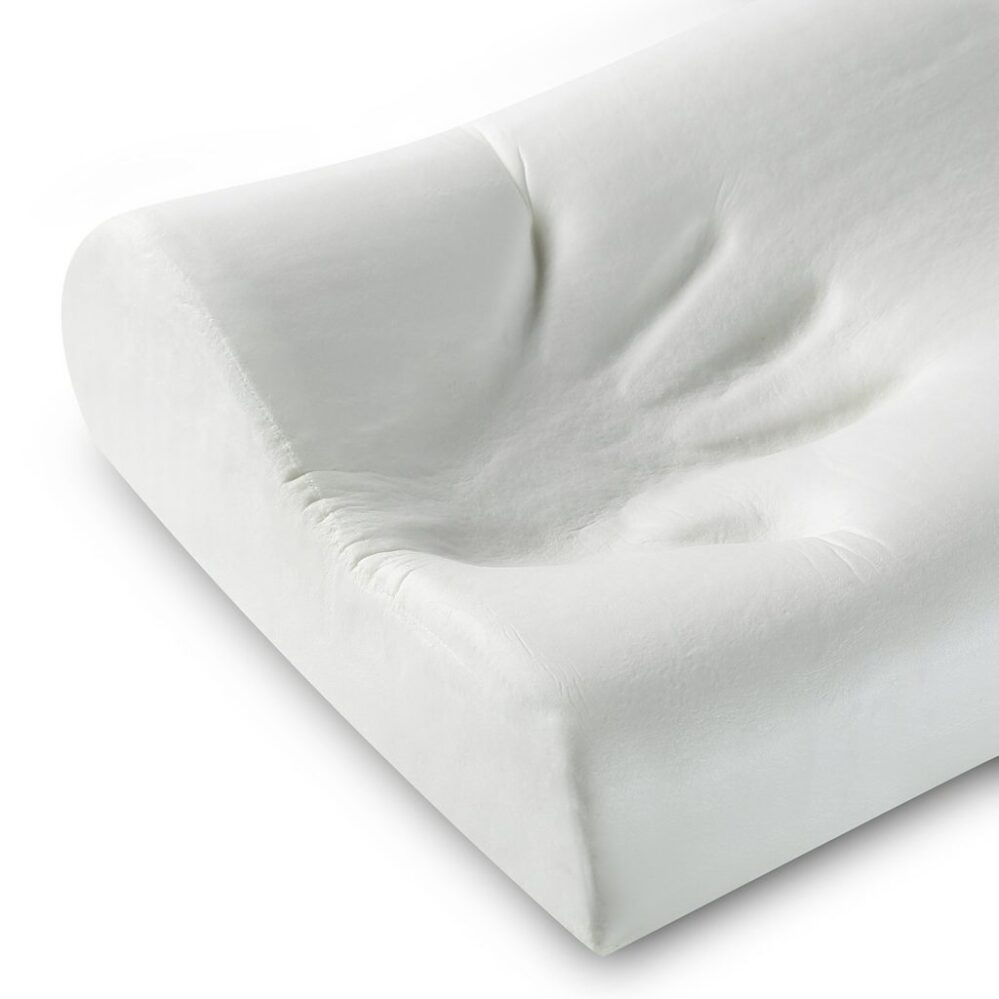
How many pillows do you sleep on at night? Two? Uh, oh. Okay I am kidding, but this actually does have a medical name.
It is called orthopnea. If you sleep propped up on more than one pillow at night because you have difficulty breathing deeply while lying down, it could be a sign of something more serious.
There are 19 known causes of orthopnea, some more serious than others.
The most common of these are sleep apnea, asthma, acid reflux, left-sided heart failure and chronic obstructive pulmonary disease.
Sleeping on more than one pillow may not seem like a good reason to head to the doctor, but considering the possible causes, you probably should. Better safe than sorry, right?
The severity of orthopnea is often described by the number of pillows one must use at night.

For example, it can be described as “two pillow orthopnea”, or “three pillow orthopnea”. The smallest form of orthopnea is one pillow orthopnea.
This is when an individual doesn’t necessarily need more than one pillow to sleep, but has difficulty breathing and may have a lot of trouble if forced to lay flat without a pillow.
On the other hand, some people are forced to sleep in a completely upright position. This is obviously not the ideal way to sleep and can lead to serious insomnia.
Treatment of orthopnea will depend on the condition that is causing it. Often, if the patient is overweight, weight loss can help them breathe better while lying down.
There are a few tests your doctor may decide to do to diagnose the problem. These are an ECG, pulmonary function tests, a chest x-ray and an echocardiogram.
If your shortness of breath is severe and dangerous, your doctor may provide supplemental oxygen. The exam itself will focus on your heart and lungs, considering these are the most likely problem areas.
It is best not to worry if you think you may have this condition. Stress is a major cause of insomnia, which you are probably already experiencing to some extent. Lack of sleep can lead to more health issues, and it is best not to collect those.
Luckily, most of the causes of orthopnea are easily treatable. A simple trip to the doctor can ease your mind and ensure that you will stay healthy. This way, you will no longer be taking a risk by sleeping with just one pillow.
Related: best mattresses of 2026
Related: compare mattress brands
Related: best pillows for side sleepers
Related: cooling vs regular pillow
Related: best cooling mattresses
Related: how your mattress affects your body
Related: best mattresses for side sleepers
Related: king vs queen mattress
Related: mattress sizes guide
Choosing the Right Pillow for Neck Support
The connection between your pillow and neck health is more significant than many people realize — an improperly supportive pillow can cause or worsen neck pain, headaches, and shoulder tension over time. The primary function of a neck-support pillow is to maintain the natural cervical curve of your spine, filling the gap between your neck and the mattress surface while keeping your head in neutral alignment. Contoured or cervical pillows feature a raised edge under the neck and a lower center for the head, specifically designed to maintain this alignment for back sleepers. Side sleepers typically need a higher loft (4-6 inches) to bridge the distance between their shoulder and head, while back sleepers generally need a medium loft (3-4 inches), and stomach sleepers benefit from a very thin pillow or no pillow at all to prevent hyperextension of the neck.
When to Replace Your Pillow for Neck Health
Even the highest quality pillow gradually loses its supportive properties, and continuing to use a worn-out pillow can negate the benefits of an otherwise excellent sleep setup. A simple test for pillow effectiveness: fold your pillow in half and release it — if it does not spring back to its original shape quickly, the internal materials have lost their resilience and the pillow is no longer providing adequate support. Most pillow materials have predictable lifespans: synthetic fiber fill pillows should be replaced every 1-2 years, memory foam pillows every 2-3 years, and latex pillows every 3-4 years. If you wake with a stiff or sore neck more than occasionally and your mattress is in good condition, your pillow is likely the culprit and replacement should be a priority before seeking more expensive solutions.