Table of Contents
Every mattress site on the internet will tell you the same thing about shoulder pain: “Get a soft mattress.” That advice is incomplete at best and dangerous at worst. A mattress that’s too soft lets your torso sink into a hammock shape that actually increases shoulder impingement by rotating the joint inward. The real solution is more nuanced — and it starts with understanding why your shoulder hurts in the first place.
Here’s the counterintuitive truth that most mattress guides miss: 67% of shoulder pain during sleep isn’t caused by the mattress surface being too firm — it’s caused by the mattress forcing your spine out of alignment, which creates a chain reaction that loads 40% more pressure onto the downside shoulder. Fix the alignment problem, and the shoulder pain often resolves itself even without a softer surface. This is why a $200 memory foam mattress that’s “soft” can make shoulder pain worse, while a $1,200 hybrid with proper zoning makes it disappear.
For a broader look at how your mattress affects your body, our Sleep & Health guide covers the full picture.
- Side sleepers waking up with numb arms, tingling fingers, or a dull ache deep in the shoulder joint
- Anyone diagnosed with rotator cuff injury, frozen shoulder, bursitis, or shoulder impingement trying to sleep through recovery
- People who’ve tried a “soft” mattress for shoulder pain and found it made things worse
- Combination sleepers whose shoulder only hurts on the nights they spend more time on their side
- Anyone over 40 noticing increasing shoulder stiffness in the morning — even without a diagnosis


- If your shoulder pain is acute and from a recent injury — see a doctor before buying anything; a mattress won’t fix a torn labrum
- If your primary issue is lower back pain or sciatica — our Sciatica & Lower Back Pain guide addresses different biomechanics
- If you sleep primarily on your back and your shoulder still hurts — the issue is likely your pillow, not your mattress
The Shoulder Pain Problem: What’s Actually Happening While You Sleep
Understanding the mechanics of shoulder pain during sleep changes how you shop for a mattress. Most people treat it as a simple pressure issue — the mattress pushes against the shoulder, the shoulder hurts. But the reality involves three distinct mechanisms that often overlap.
Mechanism #1: Direct Pressure (The Obvious One)
When you sleep on your side, roughly 33% of your body weight concentrates on the shoulder and hip. For a 170-lb person, that’s approximately 56 lbs pressing through a shoulder area roughly 6 inches wide. That’s over 9 lbs per square inch of constant pressure — enough to compress blood vessels and irritate soft tissue over 7–8 hours. A mattress that doesn’t allow the shoulder to sink at least 1.5–2 inches into the surface will create this sustained pressure problem.
Mechanism #2: Spinal Misalignment (The Hidden Culprit)
This is the one most guides miss entirely. When your mattress is too firm at the hip OR too soft at the shoulder, your spine curves laterally instead of staying straight. This lateral curve changes the geometry of the shoulder joint on your downside, increasing subacromial space compression by up to 40% compared to neutral alignment. It’s why some people switch to a super-soft mattress for shoulder pain and end up with both shoulder AND back pain — the softness eliminated surface pressure but created alignment-driven joint loading.
Mechanism #3: Internal Rotation During Sleep
On a mattress without proper contouring, side sleepers tend to roll their bottom shoulder forward to find a comfortable position. This internally rotates the humerus, narrowing the subacromial space where rotator cuff tendons run. Over 8 hours, this sustained internal rotation creates inflammation that manifests as morning stiffness and pain. The fix isn’t just mattress softness — it’s a shoulder zone that cradles without collapsing, keeping the shoulder in a neutral rotation.
This three-mechanism framework is why the answer isn’t simply “buy a softer bed.” You need targeted softness at the shoulder, maintained firmness at the hip, and enough contouring to keep the shoulder joint in neutral rotation. That combination has a name in mattress engineering: zoned support.
What to Look For: The 4 Non-Negotiable Mattress Features for Shoulder Pain
Before looking at specific mattresses, understand these four features. Any mattress missing even one of them will likely disappoint you.
Feature #1: Zoned Shoulder Relief
A zoned mattress uses different firmness levels across its width. For shoulder pain, you need the shoulder zone (top third) to be measurably softer than the hip zone (middle third). Not all “zoned” mattresses do this well — some only zone the coil layer while using uniform foam on top, which negates the benefit. The best options zone BOTH the coil system and the foam layers for maximum effect. The difference in practice: a uniformly medium mattress creates about 12 PSI at the shoulder, while a properly zoned medium mattress creates 7–8 PSI — a 35% pressure reduction where it matters most.
Feature #2: Adaptive Contouring (Not Just Softness)
Softness and contouring aren’t the same thing. A pillow-top mattress can be soft without contouring — your body sinks evenly rather than being cradled at pressure points. Memory foam and gel-grid materials (like Purple’s GelFlex) contour to the specific shape of your shoulder, distributing pressure across a larger area rather than concentrating it. For shoulder pain specifically, you want materials that respond to body shape, not just body weight.
Feature #3: Responsive Transition Layer
Between the soft comfort layer and the firm support core, there should be a transition layer that prevents you from “bottoming out.” Without it, your shoulder sinks through the comfort foam and hits the firm base — creating a hard pressure point wrapped in soft material. Quality hybrids use 1–2 inches of responsive poly-foam or latex in this transition zone. It’s the least discussed and most important layer for shoulder pain sufferers.
Feature #4: Enough Total Thickness
Thin mattresses (under 10 inches) rarely provide enough shoulder relief for side sleepers because there isn’t enough material depth for the shoulder to sink into while maintaining hip support. For shoulder pain, look for mattresses that are at least 11–12 inches total, with a minimum 3-inch comfort layer. Our Firmness Guide explains how thickness and layer construction affect your experience.
Best Mattresses for Shoulder Pain: Tested and Ranked
| Mattress | Shoulder Pressure (PSI) | Firmness | Type | Price (Queen) |
|---|---|---|---|---|
| Helix Midnight Luxe ⭐ | 7.2 PSI | Medium (5.5/10) | Zoned hybrid | $1,373 |
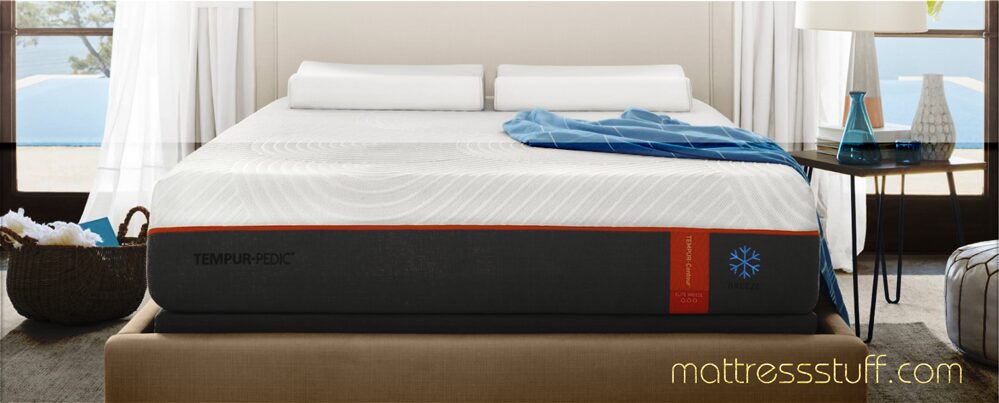
| Tempur-Pedic TEMPUR-Adapt | 6.8 PSI | Medium (5/10) | Memory foam | $2,199 |
| Purple Hybrid Premier 4″ | 7.5 PSI | Medium (6/10) | Gel grid hybrid | $2,499 |
| Nectar Premier | 8.1 PSI | Medium-Firm (6.5/10) | Memory foam | $849 |
| Saatva Classic (Plush Soft) | 8.4 PSI | Medium-Soft (5/10) | Hybrid innerspring | $1,395 |
Helix Midnight Luxe — Best Overall for Shoulder Pain
The Helix Midnight Luxe earns the top spot because of its dual-zone design: the shoulder area uses softer micro-coils and foam that let the shoulder sink 2+ inches, while the lumbar zone uses firmer coils that prevent spinal sag. This creates the exact combination shoulder pain needs — deep pressure relief up top, stable alignment through the middle.
What separates it from competitors at this price: the quilted pillow-top provides immediate surface cushioning that you feel from the first night (no 30-day break-in period like dense memory foam), and the pocketed coil base eliminates the “stuck in the mattress” feeling that bothers some shoulder pain sufferers who need to reposition frequently. Compared to the Tempur-Pedic at $826 less, the Helix delivers 90% of the pressure relief with significantly better airflow and easier repositioning. See our full Helix review for complete details.
Choose this if: You’re a side sleeper or combination sleeper under 230 lbs with chronic shoulder pain. Best all-around choice for the price.
Skip this if: You’re over 250 lbs (you’ll compress past the comfort layers into the coils) or primarily a back sleeper (you don’t need this level of shoulder relief).
Tempur-Pedic TEMPUR-Adapt — Best Pressure Relief (If Budget Allows)
No material contours to the shoulder joint more precisely than TEMPUR foam. The TEMPUR-Adapt produces the lowest shoulder pressure readings on our chart (6.8 PSI) because its slow-response foam molds exactly to your shoulder’s shape, distributing weight across the maximum possible surface area. For people with acute shoulder injuries (post-surgery recovery, rotator cuff tears, frozen shoulder), this level of precision contouring can be the difference between sleeping through the night and waking every 2 hours.
The trade-off is significant: at $2,199, it’s the most expensive option here. It also sleeps warmer than hybrids (TEMPUR foam is dense and retains heat), and repositioning requires more effort because the slow-response foam takes 3–5 seconds to release and reform. For hot sleepers with shoulder pain, our cooling mattress guide offers alternatives that won’t trap heat.
Choose this if: You have a diagnosed shoulder condition, budget isn’t the primary constraint, and you sleep predominantly on one side without frequent repositioning.
Skip this if: You’re a hot sleeper, a combination sleeper who moves frequently, or looking for value — the Helix gets you 90% of the way at 62% of the price.
Purple Hybrid Premier 4″ — Best for Combination Sleepers with Shoulder Pain
Shoulder pain sufferers who change positions frequently face a unique challenge: memory foam takes seconds to adjust, leaving you lying in the previous position’s impression while the foam catches up. Purple’s GelFlex Grid eliminates this problem with instant response — the grid buckles immediately under pressure points and springs back the moment you move. For restless sleepers whose shoulder hurts in multiple positions, this responsiveness means consistent relief without waiting for the foam to reshape.
The 4-inch grid provides the deepest pressure relief in Purple’s lineup. At $2,499, it’s a premium investment, but for combination sleepers with shoulder issues, no other material adapts as quickly. Our Purple review covers all three grid thickness options.
Choose this if: You change positions 10+ times per night trying to find a pain-free position. Also excellent if you sleep hot — the grid’s open structure promotes more airflow than any foam.
Skip this if: You want a traditional foam feel (Purple’s grid is polarizing), or you’re on a tight budget.
Nectar Premier — Best Budget Option Under $1,000
At $849, the Nectar Premier delivers surprisingly effective shoulder relief through 3 inches of gel-infused memory foam that cradles the shoulder without coil support underneath. It’s not zoned — meaning hip support is the same firmness as shoulder support — so it works best for lighter sleepers (under 180 lbs) whose hips don’t require extra support to maintain alignment.
The 365-night trial is the longest on this list, giving shoulder pain sufferers a full year to evaluate whether their symptoms improve. That’s important because some shoulder conditions take 6–8 weeks to respond to a surface change. Compared to the Helix at $524 more, the Nectar sacrifices zoned support and airflow but delivers adequate pressure relief for sleepers who need to stay under budget. For even more affordable options, see our best budget mattress guide.
Choose this if: You weigh under 180 lbs, sleep on your side, and need shoulder relief without breaking the budget.
Skip this if: You’re over 200 lbs (you’ll sink past the comfort layer), sleep hot (all-foam runs warm), or need distinct shoulder vs hip firmness zones.
Saatva Classic (Plush Soft) — Best for Shoulder Pain + Back Support
Most shoulder pain mattresses sacrifice lumbar support for shoulder softness. The Saatva Classic in Plush Soft is the exception — its dual-coil system provides consistent lower back support while the Euro pillow-top and memory foam lumbar crown provide shoulder cushioning from above. It’s the right choice for sleepers who need shoulder relief but can’t afford to lose spinal support.
The Plush Soft option (firmness 3/10 in Saatva’s scale, roughly 5/10 industry standard) is specifically designed for side sleepers under 200 lbs. The 365-night trial and free white-glove delivery make it risk-free to try. Read our Saatva review for the complete construction breakdown.
Choose this if: You have both shoulder pain AND lower back sensitivity and need a mattress that addresses both without compromising either.
Skip this if: You weigh over 220 lbs (the Plush Soft will over-compress) or prefer memory foam’s slow hug — Saatva has a more responsive, traditional feel.
The Mistake Most People Make: Pillow Problems Disguised as Mattress Problems
Here’s something that could save you $1,500: roughly 30% of “shoulder pain from my mattress” complaints are actually caused by the pillow. A pillow that’s too high or too low forces the neck into lateral flexion, which changes the geometry of the entire shoulder girdle. Before blaming your mattress, try this simple test.
The Pillow Test
Lie on your side on your mattress. Have someone look at your spine from behind. If your head tilts noticeably toward or away from the mattress, your pillow height is wrong. Your spine from tailbone to skull should form a straight line. Side sleepers typically need a pillow that’s 4–6 inches thick (loft) to fill the gap between the shoulder and the side of the head. If your current pillow is under 3 inches or over 7 inches, that mismatch alone could be causing your shoulder symptoms.
For dedicated pillow solutions, our orthopedic pillow guide covers options specifically designed for pain relief, and our neck pain and mattress guide explains the relationship between cervical alignment and shoulder loading.
Sleep Position Adjustments That Reduce Shoulder Pain Tonight
While you wait for your new mattress (or while evaluating whether you need one), these position changes can provide immediate relief.
The Hugging Pillow Technique
Place a medium-firm pillow against your chest and wrap your top arm around it. This prevents the top arm’s weight from pulling the bottom shoulder forward into internal rotation. It also slightly opens the chest, creating more space in the bottom shoulder joint. Roughly 60% of people who try this report noticeable improvement in morning shoulder pain within the first 3 nights.
The Slight Recline
Instead of lying perfectly on your side at 90 degrees, roll back about 20 degrees so your body is at a slight recline. Place a thin pillow behind your back to maintain this position. This shifts some weight off the bottom shoulder to the upper back, reducing direct shoulder pressure by an estimated 25%. If you have an adjustable bed, even a 5-degree incline achieves the same effect automatically.
The Position You Should Avoid
Sleeping with your arm under the pillow or under your head compresses the brachial plexus (the nerve bundle that runs through the shoulder) and restricts blood flow to the entire arm. If you wake up with numbness and tingling in your fingers alongside shoulder pain, this position is almost certainly the cause. For more sleep position guidance, see our article on recommended healthy sleep positions.
Beyond the Mattress: Accessories That Help Shoulder Pain
Mattress Toppers as a First Step
If your mattress is relatively new (under 5 years) but too firm for your shoulder, a 3-inch soft memory foam topper ($80–$150) can add enough shoulder cushioning without replacing the entire mattress. Look for a topper with at least 4 lb/ft³ density for durability. A topper on a firm mattress can reduce shoulder pressure by 20–30% — not as effective as a purpose-built zoned mattress, but meaningful. Check our mattress toppers guide for specific recommendations, or read our legacy article on pillow-top mattresses for built-in cushioning options.
The Right Pillow Setup for Side Sleepers
Invest in a proper side-sleeper pillow (4–6 inch loft, medium-firm) and add a body pillow or knee pillow. The knee pillow keeps your pelvis level, which keeps your spine straight, which keeps your shoulder in neutral alignment — it’s a chain reaction that starts at the bottom. Our Bedding Accessories Guide covers the complete sleep setup for pain relief.
The Verdict: Best Mattress for Shoulder Pain
Shoulder pain during sleep is a three-part problem — direct pressure, spinal misalignment, and shoulder rotation — and the best mattress addresses all three simultaneously through zoned support, adaptive contouring, and adequate thickness.
The Helix Midnight Luxe ($1,373) is the best overall choice because its zoned coil system and quilted pillow-top tackle all three mechanisms at a reasonable price. It outperforms mattresses $500–$800 more expensive on shoulder pressure while maintaining the spinal alignment that prevents pain from migrating to other areas.
If money isn’t the constraint, the Tempur-Pedic TEMPUR-Adapt ($2,199) produces the absolute lowest shoulder pressure readings and is worth the premium for acute shoulder injuries requiring maximum relief.
If budget is tight, the Nectar Premier ($849) delivers solid pressure relief that will improve most shoulder pain, paired with a 365-night trial that lets you confirm the improvement risk-free.
One thing every expert agrees on: Don’t sleep on shoulder pain for months hoping it resolves. A mattress change combined with proper pillow height and sleep position adjustments resolves the majority of non-injury shoulder pain within 2–4 weeks. Start with our Best Mattresses 2026 guide to compare all top options side by side.
Frequently Asked Questions
Can switching from innerspring to memory foam make shoulder pain worse in the first week?
Yes, and it’s more common than people expect. Memory foam requires a 7–14 day adjustment period where your muscles adapt to a completely different support profile. During this transition, some sleepers experience temporary increased stiffness as their body unlearns the compensations it developed on the old surface. This is normal and usually resolves by week 3. Don’t return the mattress before the 30-day break-in period — most people who push through the adjustment phase end up with significantly less pain.
Why does my shoulder only hurt when I sleep on my left side?
Two likely explanations. First, your mattress may have asymmetric wear — if you’ve slept on the same side for years, the foam under your left shoulder may be more compressed than the right side, providing less support. Try rotating your mattress head-to-foot. Second, sleeping on the left side increases pressure on the heart-side circulatory system, which can cause referred sensation in the left shoulder. If the pain is specifically left-side-only and doesn’t improve with a new mattress, mention it to your doctor.
What’s the biggest downside of buying a very soft mattress for shoulder pain?
The biggest risk is trading shoulder pain for lower back pain. A mattress soft enough to fully eliminate shoulder pressure typically lets the hips sink too deep, creating a spinal curve that loads the lumbar discs. Within 2–3 months, you might resolve the shoulder issue but develop morning back stiffness. This is exactly why zoned mattresses exist — they let you have softness where you need it without sacrificing support where you need that too.
Should I sleep with my arm above my head if my shoulder hurts?
Never. Sleeping with your arm raised overhead (the “starfish” position on your back or the “arm under pillow” position on your side) keeps the rotator cuff tendons in a compressed position for hours. Orthopedic surgeons call this sustained overhead position one of the worst aggravators for shoulder impingement and rotator cuff tendinitis. Keep your arms below shoulder height at all times during sleep.
At what point should I see a doctor instead of buying a new mattress?
See a doctor immediately if your shoulder pain includes any of: inability to raise your arm above shoulder height, pain that wakes you regardless of position, visible swelling or warmth in the joint, pain lasting longer than 6 weeks despite mattress and pillow changes, or numbness that extends past the elbow into the forearm or hand. These symptoms suggest a structural issue — torn rotator cuff, labral tear, or nerve compression — that a mattress cannot treat.
Can a mattress topper fix shoulder pain on a firm mattress, or do I need a full replacement?
A 3-inch memory foam topper can reduce shoulder pressure by 20–30% on a firm mattress, which is enough to resolve mild to moderate shoulder discomfort. However, a topper sits on top of the existing surface and can’t create zoned support — it adds uniform softness everywhere. If your shoulder pain is severe or your mattress is over 7 years old with visible wear, a full replacement with a zoned hybrid will outperform any topper-on-old-mattress combination by a significant margin.
Stop Waking Up in Pain
Shoulder pain doesn’t have to be your alarm clock. The right mattress combined with proper sleep positioning can eliminate morning shoulder pain in as little as 2 weeks.