Table of Contents
Most people agonize over their mattress choice for weeks, then throw whatever pillows and sheets they find on sale at Target on top of it. That’s like buying a great car and filling it with the cheapest gas. Your mattress is the foundation, but your bedding accessories determine how that foundation actually performs against your body every night.
The good news: you don’t need to spend a fortune on accessories. A few well-chosen items — the right pillow, decent sheets, and a mattress protector — can transform your sleep experience for under $200 total. The bad news: the bedding accessories market is even more confusing than the mattress market, with meaningless thread counts, buzzword fabrics, and marketing claims that range from misleading to outright false.
This guide cuts through the noise. Whether you’ve just bought one of our recommended best mattresses for 2026 or you’re upgrading your current setup, here’s everything you need to build a complete sleep system — prioritized by impact and organized by category.
Bedding Accessories Priority Guide: Where to Spend First
| Priority | Accessory | Impact on Sleep | Budget Range | Why It Matters |
|---|---|---|---|---|
| 1 | Pillow | Very High | $30-120 | Controls neck alignment — wrong pillow ruins a perfect mattress |
| 2 | Mattress Protector | High (long-term) | $25-60 | Guards against spills, allergens, dust mites — extends mattress life |
| 3 | Sheets | High | $50-200 | The surface against your skin all night — breathability and comfort |
| 4 | Mattress Topper | High (if needed) | $80-300 | Fine-tunes firmness without replacing mattress |
| 5 | Bed Frame | Medium-High | $150-2,000+ | Foundation support — wrong frame can void mattress warranty |
| 6 | Weighted Blanket | Medium | $40-200 | Deep pressure therapy — reduces anxiety, improves sleep onset |

Who This Guide Is For
- New mattress buyers who want to build a complete sleep setup around their purchase
- People with a good mattress but poor sleep — your accessories might be the bottleneck
- Anyone overwhelmed by bedding options who wants clear guidance on what actually matters
- Budget-conscious shoppers who want to know where to spend and where to save
Who Should Skip This
- Looking for specific product picks — our dedicated guides for Mattress Toppers, Pillows for Side Sleepers, and Bed Sheets go deeper with tested recommendations
- Need a new mattress first — accessories can’t fix a bad mattress. Start with our Best Mattresses 2026 guide
Pillows: The Most Underrated Sleep Accessory
Why Your Pillow Matters as Much as Your Mattress
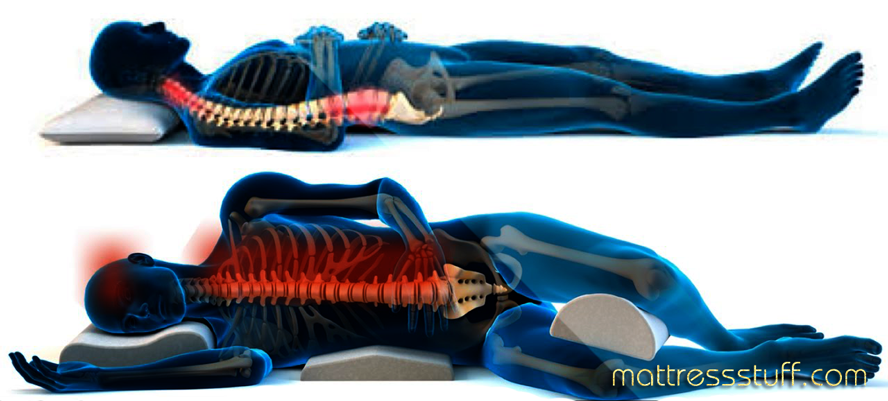
Your pillow controls the alignment of your cervical spine — the seven vertebrae in your neck that connect your head to your body. A pillow that’s too high pushes your head forward, straining neck muscles and compressing cervical discs. Too low, and your head drops, creating the opposite misalignment. Either way, you wake up with neck stiffness, headaches, or shoulder pain that you might wrongly blame on your mattress.
The right pillow keeps your head and neck in a neutral position relative to your spine. For side sleepers, this means a thicker, firmer pillow that fills the gap between the ear and the outside of the shoulder. For back sleepers, a medium-loft pillow that supports the natural neck curve without pushing the head forward. For stomach sleepers, a thin or nearly flat pillow — or no pillow at all — to prevent neck hyperextension.
Pillow Types: What’s Inside Matters
Memory foam pillows contour to your head and neck shape, providing consistent support throughout the night. They excel for side sleepers and people with neck pain. The downside: they retain heat and have a slow response when you change positions. Shredded memory foam solves the heat issue better than solid blocks. For a full breakdown, see our cooling vs regular pillow comparison.
Latex pillows offer similar contouring to memory foam but with more bounce and better breathability. They’re naturally hypoallergenic and resist dust mites. The higher price point ($50-100) is justified by longevity — latex pillows last 3-4 years versus 1-2 for polyester.
Down and down-alternative pillows are the softest option, providing a cloud-like feel that many sleepers prefer. They’re highly adjustable — you can add or remove fill to change loft. Pure down is luxury-priced and requires careful washing; down-alternative provides 80% of the feel at a fraction of the cost and is machine-washable.
Buckwheat and specialty pillows are niche options with specific strengths. Buckwheat hulls provide firm, adjustable support that conforms to your head without compressing. They sleep very cool but make a rustling sound when you move. For our dedicated pillow recommendations by sleeping position, our upcoming Best Pillows for Side Sleepers guide covers the category in depth.
Pillow Replacement: How Often?
Most people keep pillows far too long. Replace your pillow every 1-2 years for polyester fill, 2-3 years for memory foam, and 3-4 years for latex or buckwheat. The fold test works for non-foam pillows: fold it in half — if it doesn’t spring back immediately, it’s lost its support and needs replacing.
Mattress Toppers: Fine-Tuning Your Sleep Surface
When You Need a Topper (and When You Don’t)
A mattress topper is a 2-4 inch layer that sits on top of your mattress, modifying the feel of the sleeping surface without replacing the entire bed. Toppers solve specific problems: a too-firm mattress can be softened with a memory foam or latex topper, an aging mattress can get a comfort refresh, and a guest bed can be upgraded for temporary use.
Toppers do NOT fix structural issues. If your mattress is sagging, has permanent body impressions deeper than 1.5 inches, or has a broken support core, a topper sits on top of the problem — it doesn’t eliminate it. For structural failures, replacement is the only real solution. See our Mattress Buying Guide for when repair vs. replace makes sense.
Topper Materials Compared
Memory foam toppers (2-4″) are the most popular choice for adding pressure relief to a firm mattress. They contour to your body and absorb motion. Best for side sleepers and people with joint pain. The tradeoff is heat retention — gel-infused options help but don’t fully solve this. Budget range: $80-200 for a Queen.
Latex toppers (2-3″) provide similar pressure relief with better responsiveness and breathability. They bounce back faster when you change positions and sleep noticeably cooler than memory foam. Natural latex is hypoallergenic and extremely durable (5+ years). The higher price ($150-350 for a Queen) reflects superior longevity and material quality. Our upcoming Memory Foam vs Latex Topper comparison breaks down the differences in detail.
Down/feather toppers (2-4″) add a plush, hotel-like softness without changing the firmness of the underlying mattress. They’re the best option for making a firm mattress feel more luxurious without altering its support. However, they flatten over time and need regular fluffing. Not ideal for people who need actual pressure relief — they add softness but minimal contouring. Our legacy Ultimate Guide to Mattress Toppers covers all types comprehensively.
Bed Sheets: The Surface Against Your Skin
Fabric Types That Actually Matter
Your sheets are the only bedding that touches your skin directly for 7-8 hours every night. The fabric determines breathability, moisture management, temperature feel, and skin comfort. Here’s what’s worth knowing — and what’s marketing hype.
Cotton percale is the gold standard for breathable sheets. It’s a tight, plain-weave fabric with a crisp, cool feel. Percale breathes exceptionally well and actually gets softer with each wash. It’s the best choice for hot sleepers and warm climates. Look for 200-400 thread count — higher doesn’t mean better with percale, and anything above 400TC is probably misleading marketing.
Cotton sateen has a silkier, smoother feel with a slight sheen. It’s warmer than percale because the satin weave traps more air. Best for people who prefer a luxurious feel and don’t sleep hot. Sateen wrinkles more than percale and tends to pill faster after many washes.
Bamboo-derived rayon (Tencel/Lyocell) is the best option for temperature regulation. These fibers absorb 50% more moisture than cotton and release it faster, keeping the sleep surface drier and cooler. They’re naturally hypoallergenic and incredibly soft. The price is comparable to quality cotton ($80-150). For hot sleepers who want every advantage, bamboo-derived sheets are the smart play.
Linen sheets are the most breathable natural fiber available. They sleep cool in summer and retain warmth in winter, making them excellent for year-round use. The texture is intentionally casual and textured — some people love it, others find it rough. Linen softens dramatically with washing and lasts 10+ years. For a deeper dive into sheet selection, our legacy Bed Sheets Buying Guide covers thread count myths and fabric comparisons.
The Thread Count Myth
Thread count — the number of threads per square inch — is the most overhyped metric in bedding. Manufacturers inflate thread counts by using multi-ply threads (counting each ply separately), creating sheets with “1000TC” that feel worse than honest 300TC percale. The truth: for cotton, 200-400TC is the quality sweet spot. Above 400, you’re paying for marketing, not comfort. Fabric quality (fiber length, weave type) matters far more than thread count.
Mattress Protectors: The Insurance Policy You Need
Why Every Mattress Needs a Protector
A mattress protector costs $25-60 and serves three critical functions: waterproofing (prevents spill and sweat damage to foam), allergen barrier (blocks dust mites, pet dander, and skin cells from penetrating the mattress), and warranty compliance (many manufacturers require a protector to honor stain-related claims).
The best protectors are thin, breathable, and undetectable during sleep. Look for waterproof-but-breathable membranes (TPU or polyurethane film) that block liquids without trapping heat. Avoid vinyl or plastic protectors — they’re waterproof but create a hot, crinkly sleeping surface. A good protector adds zero noticeable change to how your mattress feels while providing essential protection underneath.
Protector vs. Mattress Pad vs. Encasement
A protector is a thin, fitted cover that goes over the mattress like a fitted sheet. It blocks moisture and allergens from the top surface. A mattress pad adds light cushioning (usually quilted polyester fill) in addition to protection — useful for adding a touch of softness. An encasement wraps the entire mattress in a zippered cover, sealing all six sides. Encasements are the gold standard for allergy and bed bug protection but are harder to remove for washing.
Weighted Blankets: The Science of Deep Pressure
How Weighted Blankets Work
Weighted blankets apply deep pressure stimulation — a gentle, distributed pressure across your body similar to being hugged or swaddled. This activates the parasympathetic nervous system, reducing cortisol (stress hormone) and increasing serotonin and melatonin production. The result: faster sleep onset, reduced anxiety, and fewer nighttime awakenings.
Clinical research supports these benefits for generalized anxiety disorder, insomnia, and restless leg syndrome. The effects are most pronounced for people who experience anxiety-related sleep difficulty — if you lie awake because your mind races, a weighted blanket may help more than any pillow or sheet upgrade. Our upcoming Best Weighted Blankets 2026 guide covers specific picks and weight selection.
Choosing the Right Weight
The standard recommendation is 10% of your body weight: a 150-lb person uses a 15-lb blanket, a 200-lb person uses a 20-lb blanket. This is a starting point, not a rule — some people prefer slightly heavier (12-15%) for more pronounced pressure, while others find 8-10% sufficient. Our weighted blanket weight guide covers all the nuances for different body types and preferences. If you share a bed, each person should have their own weighted blanket rather than sharing one sized for combined weight — the pressure needs to be individual.
Bed Frames and Adjustable Bases
Your Frame Affects Your Mattress Performance
The wrong bed frame can void your mattress warranty and degrade performance. Memory foam and hybrid mattresses need a solid, flat surface or slatted base with slats no more than 3 inches apart. Innerspring mattresses can use box springs or foundations. Placing any mattress directly on the floor restricts airflow underneath, promoting mold growth and heat retention — always use a frame or foundation.
For most people, a basic platform bed frame ($150-400) provides everything you need: solid surface support, appropriate height, and adequate under-bed airflow. If aesthetics matter, headboard and footboard styles range from $200 to $2,000+ but don’t affect sleep quality. Our Mattress Sizes & Setup Guide covers frame compatibility for every mattress size.
Adjustable Bed Frames: Worth the Investment?
Adjustable bases let you raise the head and foot of the bed independently. Health benefits include reduced snoring and sleep apnea symptoms (head elevation), improved acid reflux management (upper body elevation), reduced leg swelling and improved circulation (foot elevation), and easier getting in and out of bed for people with mobility issues.
Adjustable bases range from $300 (basic head-only) to $2,000+ (dual-zone, massage, USB ports, under-bed lighting). They work with most foam and hybrid mattresses but NOT with traditional innerspring. If you have acid reflux, snore, or use your bed for reading and watching TV, an adjustable base is one of the highest-impact investments in this guide. Our upcoming Best Adjustable Bed Frames guide will cover specific recommendations.
Building Your Complete Sleep System: Budget Tiers
Essential Tier ($75-150 total)
If you can only spend $75-150 on accessories, prioritize: one position-matched pillow ($30-50), one waterproof mattress protector ($25-40), and one set of percale cotton sheets ($40-60). This covers hygiene, neck alignment, and basic comfort — the three fundamentals that make the biggest difference for the least money.
Comfort Tier ($200-400 total)
Add a mattress topper if your mattress firmness isn’t quite right ($80-200), upgrade to bamboo or Tencel sheets for better temperature regulation ($80-150), and consider a second pillow set for guests or to experiment with different lofts. This tier handles most people’s accessory needs comprehensively.
Premium Tier ($500-1,000+ total)
At this level, add an adjustable bed frame ($300-600), a weighted blanket ($60-150), premium natural latex topper ($200-350), and luxury sheet sets in multiple materials for seasonal rotation. The premium tier is for people who’ve optimized their mattress and want every possible sleep advantage from their accessories. Our complete Mattress Buying Guide includes accessory budgeting for every price tier.
Frequently Asked Questions
What’s the single most important bedding accessory?
Your pillow. A mismatched pillow causes neck pain, headaches, and shoulder discomfort regardless of how good your mattress is. Side sleepers need a firm, thick pillow (4-6 inches). Back sleepers need medium loft (3-5 inches). Stomach sleepers need thin or flat (2-3 inches). Spending $40-80 on a position-matched pillow delivers more sleep improvement per dollar than any other accessory purchase.
Are expensive sheets worth it?
Moderately expensive sheets ($80-150) are worth it — they use better fibers, breathe more effectively, and last longer. Very expensive sheets ($200-400+) are luxury purchases with diminishing returns. The biggest quality jump happens between $30 and $80 sheets. Above $150, you’re paying for brand name, packaging, and marginal improvements that most people can’t distinguish in a blind test. Focus on fabric type (percale for cool, sateen for smooth, bamboo for moisture-wicking) rather than price.
Do I need a mattress topper with a new mattress?
Usually no. If you’ve chosen the right mattress firmness for your body, a topper shouldn’t be necessary. Wait at least 30 days with your new mattress before considering a topper — your body needs time to adjust, and initial firmness impressions are unreliable. Toppers are most valuable when your mattress is close-but-not-quite right on firmness, when extending the life of an aging mattress, or when adjusting a guest bed for different visitors’ preferences.
What thread count sheets should I buy?
For cotton percale: 200-400TC. For cotton sateen: 300-600TC. Ignore any sheets claiming 800+ thread count — these use misleading multi-ply counting or inferior short-staple cotton to inflate numbers. Fabric type and fiber quality matter far more than thread count. A 300TC long-staple cotton percale sheet will outperform a “1000TC” short-staple cotton sheet in comfort, breathability, and durability every time.
How heavy should a weighted blanket be?
Start with 10% of your body weight (e.g., 15 lbs for a 150-lb person). This provides noticeable deep pressure without feeling trapped or overheated. If you’re between sizes, go lighter rather than heavier — too-heavy blankets can feel claustrophobic and cause overheating. Weighted blankets work best as individual items, not shared between couples — each person should have their own weight.
Can a mattress protector make my mattress feel different?
A quality mattress protector should be completely undetectable during sleep. If you can feel your protector (crinkling, heat, stiffness), it’s a low-quality vinyl or plastic model that needs replacing. Modern TPU-membrane protectors are thin, silent, breathable, and waterproof — you’ll forget it’s there. The only protector that noticeably changes mattress feel is a padded mattress pad, which intentionally adds a thin cushion layer.
Complete Your Sleep Setup
Your mattress is the foundation — accessories are the finishing touches that unlock its full potential. Start with the essentials and build from there.
Find Your Perfect Mattress First →
Already have a great mattress? Explore our Sleep & Health Guide to understand how your complete sleep environment affects your body.