Table of Contents
Quick Answer: Which Edge Support System Is Best?
Foam encasement is the current standard for hybrids and performs well across use cases. But here’s the full picture:
- 🛡️ Foam Encasement: Rigid foam rail around hybrid perimeter. Common, effective, modest cost.
- 💪 Reinforced Edge Coils: Thicker-gauge springs at the perimeter. Premium innersprings. Very durable.
- 🏗️ Steel Rod Reinforcement: A metal rail around the base. Old-school, extremely durable.
- 🧱 High-Density Foam Rail: Dedicated firmer foam at the edges of all-foam mattresses. Moderate.
Couples using the full width, edge sitters, and people over 180 lb should never buy a mattress without a named edge support system.
Here’s a test you can run in any mattress showroom in 30 seconds: sit on the edge of the bed like you’re putting on your shoes. If the mattress caves in and you slide toward the floor, the edge support is weak. If the edge holds your weight almost like a chair, the edge support is strong. That 30-second test predicts whether the outer 4 inches of your mattress will be a sleeping zone or a no-go zone for the next 8 years.
This guide breaks down the four main edge support systems today — what they are, how they work, how much they cost, and which one deserves your money.
Why Edge Support Matters More Than You Think
- Usable surface: Weak edges reduce a queen mattress to effectively a full
- Couples: Without edge support, both partners drift toward the center over the night
- Getting in and out: Weak edges make sitting on the mattress uncomfortable — matters for elderly and injured sleepers
- Durability: Weak edges sag first and signal overall mattress failure within 4–5 years
⚡ TL;DR — Key Takeaways
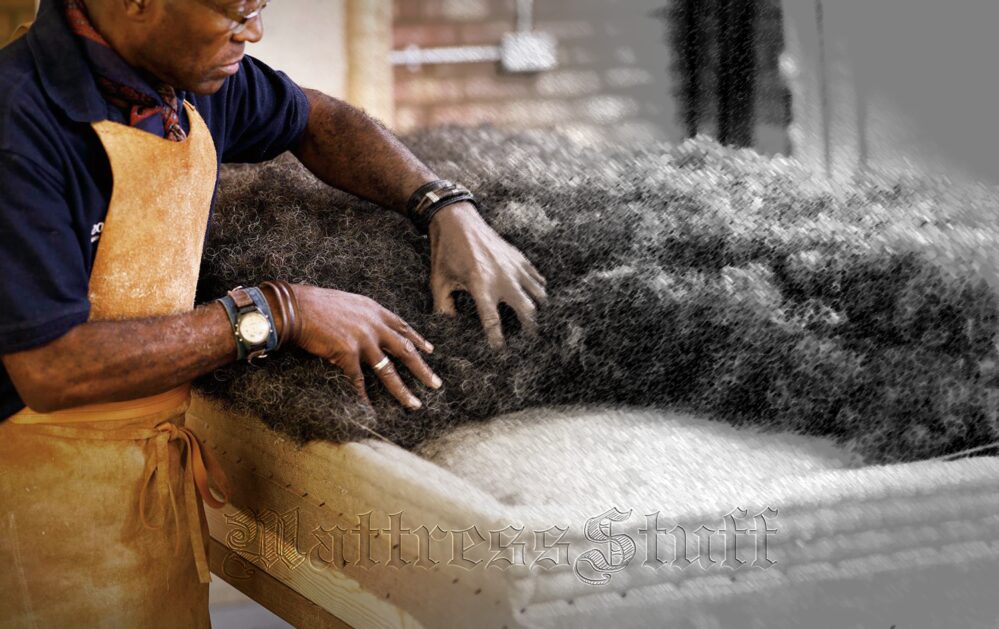

- Latex is the longest-lasting mattress material — 15-20 years for 100% natural
- Dunlop latex is denser and firmer, Talalay is lighter and more consistent
- Natural latex contains 95%+ rubber tree sap, synthetic is petroleum-based SBR
- GOLS certification is the only reliable proof of true 100% natural content
- Latex sleeps cooler than memory foam thanks to naturally open cell structure
🗺️ The Four Edge Support Systems at a Glance
| System | Construction | Found In | Effectiveness | Added Cost |
|---|---|---|---|---|
| 🛡️ Foam Encasement | Rigid foam rail surrounds coil unit | Most modern hybrids | ✅ Strong | +$80–150 |
| 💪 Reinforced Edge Coils | Thicker or denser perimeter springs | Premium innersprings | ✅ Very Strong | +$120–200 |
| 🏗️ Steel Rod Reinforcement | Metal rail around the base | Traditional luxury innerspring | ✅ Extremely Durable | +$100–180 |
| 🧱 High-Density Foam Rail | Denser foam at edges of all-foam mattress | Premium all-foam | Moderate | +$50–100 |
🛡️ Foam Encasement — The Standard
Foam encasement wraps the entire coil unit of a hybrid mattress inside a rigid perimeter rail of high-density foam. Typically 2–4 inches thick, this foam “box” replaces the outer row or two of springs with something firmer and more stable than coils alone.
The result is an edge that feels almost like a chair when you sit on it, while the center of the mattress retains all its spring-based contouring. It’s a clean engineering solution that has become the industry default for good reason.
- Works with any coil type inside the perimeter
- Low manufacturing complexity → reasonable cost
- Excellent edge sitting stability
- Maximizes usable sleeping surface to the very edge
- Compatible with mattress-in-a-box compression
Pros: strong, affordable, widely available, pairs with modern coil systems
Cons: foam rail can slowly compress over 6–8 years, slightly less breathable than pure coil perimeter
Found in: Helix, WinkBed, Brooklyn Bedding, Nectar Premier Hybrid, DreamCloud, Avocado Green, most Amazon-direct hybrids over $600.
💪 Reinforced Edge Coils — The Premium Innerspring Answer
Instead of replacing perimeter coils with foam, some mattresses simply use stronger coils at the edges. This usually means lower gauge wire (thicker steel) or a denser cluster of springs along the mattress perimeter.
The advantage is a uniform spring feel from edge to edge — no firm foam boundary between soft center and rigid rail. The disadvantage is higher cost and heavier weight.
For stomach sleepers and back sleepers who don’t want to feel a clear “boundary” at the edge of the mattress, reinforced edge coils provide a more seamless experience. They’re also more breathable since the entire perimeter remains a spring system.
Pros: uniform feel across surface, very durable, excellent breathability
Cons: more expensive, heavier, harder to find outside premium innersprings
Found in: Saatva Classic (13-gauge perimeter), Stearns & Foster Estate, Aireloom luxury lines, some Serta iComfort hybrids.
🏗️ Steel Rod Reinforcement — The Traditional Workhorse
A steel rod (or multiple rods) runs around the base perimeter of the mattress, physically bracing the edge coils. This is the classic luxury innerspring solution from an era before foam encasement dominated.
Steel rods are extremely durable — they simply don’t compress. A well-maintained steel-rod-reinforced mattress can have rock-solid edges even after 12–15 years.
Pros: virtually indestructible edges, zero compression over time, premium heritage
Cons: adds significant weight (makes rotation harder), costlier manufacturing, sometimes creates a firm “bump” feel at the mattress edge
Found in: Traditional Stearns & Foster Reserve, Aireloom, Shifman, select Kingsdown luxury lines.
🧱 High-Density Foam Rail — The All-Foam Solution
All-foam mattresses don’t have coils, so they can’t use any of the first three systems. The best they can do is use a firmer, higher-density foam at the perimeter than the rest of the mattress core. Typically 1.8–2.2 lb/ft³ foam rail around a 1.5–1.8 lb/ft³ core.
This works acceptably for lightweight sleepers but doesn’t compare to any of the coil-based systems. All-foam mattresses will always have softer edges. Period.
If you sleep with a partner and use the full width of the bed, or if edge support is important to you for any reason — consider a hybrid instead of all-foam. No high-density foam rail, no matter how well engineered, matches a real coil or encasement system.
Pros: better than no edge support, no rigid feel, works with foam-only constructions
Cons: still compresses over time, weakest edge system overall, creates “roll-off” sensation under heavier loads
Found in: Nectar Original, Casper Original, Tuft & Needle Original, Leesa Original, most memory foam boxes under $1,000.
🎯 Which System Matches Your Needs?
| Your Scenario | Best Edge System | Why |
|---|---|---|
| Couple, queen or king | Foam Encasement or Reinforced Coils | Full-width usability, zero center drift |
| Heavy sleeper (220+ lb) | Reinforced Coils or Steel Rod | Must resist compression under load |
| Elderly or mobility-limited | Foam Encasement | Stable edge sitting for getting in/out of bed |
| Single sleeper, lightweight | High-Density Foam Rail OK | Moderate edge loads acceptable |
| Luxury traditional innerspring lover | Steel Rod Reinforcement | Heritage construction, decade-plus durability |
🔍 How to Check Edge Support Before You Buy
- Sit on the very edge of the mattress like you’re putting on shoes
- Note how much the edge compresses under your full weight
- Lie down and roll to the very edge of the mattress
- Feel whether the edge supports you or tips you toward the floor
- If buying online: check for “foam encasement” or “reinforced edge” explicitly listed in specs
Red flag: any mattress product page that doesn’t name its edge support system at all.
📋 Quick FAQ
Indirectly yes. Mattresses with weak edges sag asymmetrically over time — the center dips down while the weak edges curl up. Within 3–4 years this creates a subtle “taco” effect that worsens alignment even for center sleepers.
Q: Can I add edge support to an existing mattress?
Not really. Aftermarket “bed wedges” or foam inserts don’t bond with the mattress core and shift over time. The edge support system has to be engineered from the factory.
Q: Do all Saatva mattresses have reinforced edges?
The Saatva Classic and Saatva HD use reinforced edge coils. The Saatva Memory Foam uses a high-density foam rail. Always verify on the current product page.
Q: Is foam encasement better than reinforced coils?
For cost-conscious hybrid buyers, foam encasement wins on value. For premium innerspring buyers who want a uniform coil feel throughout, reinforced coils win. Both provide strong edge support — the choice is about feel and budget.
Q: Will a cheap mattress without named edge support work for a guest room?
For occasional use (guests twice a year), yes. For daily use, no — edge sag will show within 2 years.
🧭 The Edge Is the Tell
Edge support quality is one of the clearest signals of overall mattress engineering. Brands that skimp on edge support almost always skimp elsewhere too. Brands that invest in a named edge system usually care about the rest of the build.
Ask the question. Demand the name. “Reinforced edges” is not an answer.