Table of Contents
Quick Answer: Every mattress sold in the United States must pass the 16 CFR 1633 open-flame test, which means every mattress has a hidden fire barrier layer. The four common approaches are a silica-fiber sock, a wool batting layer, a rayon/silica blend sock, or a chemical flame-retardant spray. Wool and silica-rayon socks are the two cleanest options; untreated chemical sprays (PBDEs, boric acid, antimony) are almost gone from modern US beds, but you should still verify with CertiPUR-US or GOTS paperwork.
⚡ TL;DR — Key Takeaways
- Fire barriers are federally required under CPSC 16 CFR 1633
- Silica wool barriers are inert and safest option
- Rayon treated with fire retardants is common but contains added chemicals
- Natural wool (1 inch+ thickness) passes safety tests without chemicals
- Ask for the specific fire barrier composition before buying — manufacturers rarely publicize it
Why Every Mattress Has a Fire Barrier
Since July 2007, the US Consumer Product Safety Commission has required every mattress sold in the country to survive a 30-minute open-flame test under 16 CFR Part 1633. The test uses two propane burners simulating a burning bedsheet and pillow. Heat release must stay under 200 kW peak and 15 MJ total over the 30 minutes. A bare foam mattress would fail within seconds — which is why manufacturers build a dedicated fire barrier into the construction, usually just beneath the quilted cover.
Why This Matters Today: Most shoppers never see the fire barrier because it is sewn inside the cover. But the material choice directly affects breathability, off-gassing, weight, and whether the mattress qualifies as “chemical-free.” Knowing which barrier is inside is one of the fastest ways to separate a clean-sleeping bed from a cheap one.
The Four Main Fire Barrier Systems
Nearly every modern US mattress uses one of four barrier technologies. Each meets 16 CFR 1633, but they differ sharply in price, feel, and long-term chemistry.
1. Silica Fiber Sock
A fine woven sleeve of silica (glass-derived) fibers wrapped around the foam core. Silica does not burn; at flame temperatures it simply melts and forms a protective char. It is cheap, effective, and inert — but silica fibers can migrate out of the sock if the cover is ever torn or unzipped, which is why unzipping a mattress cover usually voids the warranty.
2. Wool Batting
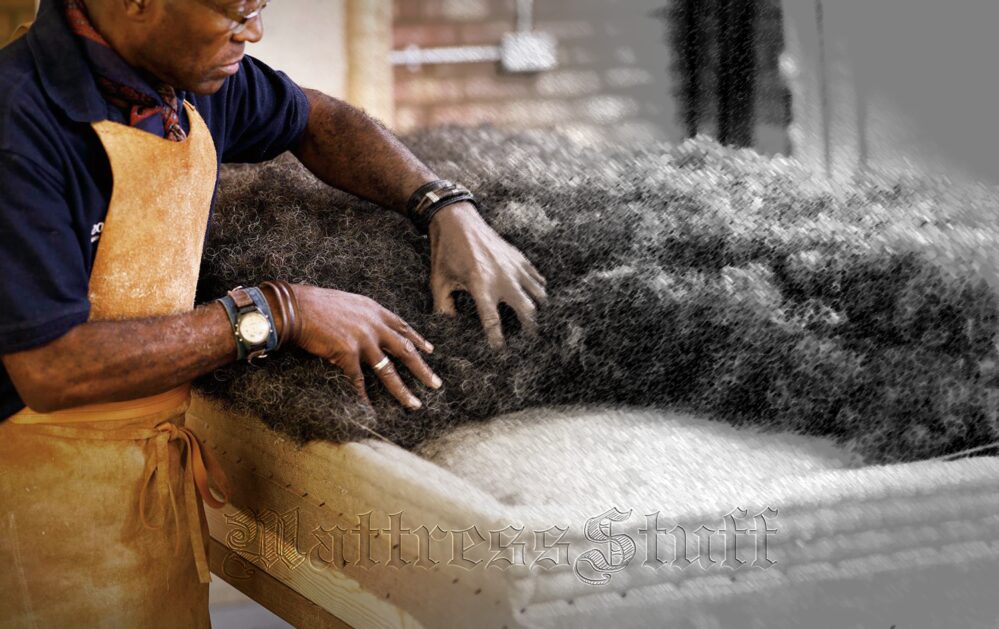
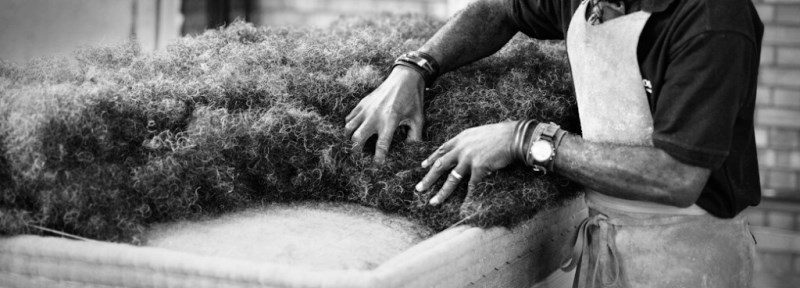
A thick layer of natural wool (often 1–3 lbs per square yard) quilted under the cover. Wool’s high keratin content means it self-extinguishes and does not sustain a flame. It is the oldest natural flame barrier known, and it is still the gold standard in luxury and organic beds.
3. Rayon / Silica Blend Sock
A hybrid where rayon (a plant-based cellulose fiber) is blended with silica to create a softer, less scratchy sock. Used in many mid-range online beds because it is cheaper than wool and more comfortable than pure silica.
4. Chemical Flame Retardant Treatment
A chemical spray or saturation applied to foam or cover fibers. Historically included PBDEs, boric acid, antimony trioxide, and chlorinated tris. Almost all major US brands phased these out over the last decade, but very cheap imported mattresses may still use unlabeled chemical treatments.
Fire Barrier Comparison Table
| Barrier Type | Natural? | Feel | Cost | Found In |
|---|---|---|---|---|
| Silica Sock | Mineral | Slightly crinkly | $ | Most budget & mid online beds |
| Wool Batting | Yes | Soft, lofty | $$$ | Organic, luxury, latex beds |
| Rayon/Silica Blend | Partial | Soft, neutral | $$ | Mid-tier hybrids |
| Chemical Spray | No | Undetectable | $ | Cheap imports, older stock |
Wool: The Premium Choice
Wool fire barriers solve three problems at once. They pass 16 CFR 1633 without any chemicals. They wick moisture away from the body (wool can absorb up to 30% of its weight in water before feeling damp). And they regulate temperature — wool fibers create tiny air pockets that insulate in winter and breathe in summer.
Brands like Avocado, Saatva Zenhaven, Birch by Helix, and Naturepedic all use wool as their primary fire barrier. The downside: wool adds cost (often $200–$400 to the retail price of a queen) and weight.
Is Wool Cruelty-Free?
Look for ZQ-certified or GOTS-certified wool. ZQ wool bans mulesing and requires humane animal treatment. GOTS (Global Organic Textile Standard) also covers processing chemicals.
Silica Fiberglass: Safe Inside, Risky When Exposed
Silica fire socks are chemically inert — they will not off-gas, trigger allergies, or degrade over time. The only genuine risk emerges if you unzip and remove the mattress cover. Consumer reports over the past decade have documented households contaminated when users did exactly this. Fiberglass-silica fragments spread through vents and upholstery.
Key Insight: A silica sock inside an intact cover is perfectly safe to sleep on. The danger is only if you physically open the mattress. Check your warranty card — nearly every brand explicitly voids coverage if the cover is removed, and many now print “DO NOT UNZIP COVER” directly on the fabric.
Chemical Flame Retardants: What to Avoid
The legacy chemicals of concern include polybrominated diphenyl ethers (PBDEs), banned in 2005; chlorinated tris (TDCPP), classified as a carcinogen by California OEHHA; boric acid, an endocrine disruptor; and antimony trioxide, a possible carcinogen. All four are largely absent from reputable US brands today, but they are not individually prohibited by federal law — only indirectly regulated through chemical reporting requirements.
Red Flag: A suspiciously cheap imported mattress ($200–$400 for a queen) with no CertiPUR-US, OEKO-TEX, or GOTS certification is the single biggest chemical-retardant risk. If the brand cannot tell you what its fire barrier is made of, assume the answer is “chemicals.”
Certifications That Verify a Clean Barrier
Three certifications do most of the work verifying barrier safety. CertiPUR-US certifies the foam contains no PBDEs, TDCIPP, TCEP, mercury, lead, or heavy metals. OEKO-TEX Standard 100 tests the entire textile stack for over 300 harmful substances. GOTS (Global Organic Textile Standard) is the strictest — it requires organic fibers and bans chemical flame retardants entirely.
What About GREENGUARD Gold?
GREENGUARD Gold tests for VOC emissions after the mattress is finished. It does not certify the barrier material itself, but it confirms the finished product emits low chemical levels into your bedroom air.
Weight and Feel Differences
Wool batting adds roughly 4–7 lbs to a queen mattress and creates a noticeably softer, more padded quilt surface. Silica socks add under 1 lb and are thinner than a cotton sheet. Rayon blends sit in between. If a mattress feels unexpectedly heavy for its materials, wool is usually the reason; if the quilted top feels dense and springy without being thick, silica is likely underneath.
Green Flag: A brand that names its fire barrier on the product page — “silica-rayon fire sock,” “1 lb/sqyd New Zealand wool,” or “GOTS wool batting” — is signaling confidence. Vague language like “fire-resistant layer” deserves an email to customer service before you buy.
Fire Barriers in Hybrid vs All-Foam vs Latex Beds
Hybrid mattresses usually place the fire barrier between the quilted top and the foam comfort layers, so coils never contact the barrier. All-foam beds wrap the entire foam core. Latex mattresses almost always use wool because wool and natural latex share the same organic/certified-clean customer base.
Frequently Asked Questions
Q: Can I sleep on a mattress with a fiberglass fire sock?
Yes — as long as the outer cover stays intact and zipped. Fiberglass fibers only escape when the cover is physically removed or torn.
Q: Which fire barrier is best for chemical sensitivity?
GOTS-certified wool is the safest choice. It uses no added chemicals, no synthetic fibers, and is naturally flame-resistant.
Q: Do federal laws require natural fire barriers?
No. Federal law requires mattresses to pass the 16 CFR 1633 flame test but does not dictate the material. Manufacturers choose based on cost and market positioning.
Q: Is silica the same as fiberglass?
Chemically very close. Both are silicon dioxide fibers. In mattress spec sheets the terms are used interchangeably.
Q: Can I add my own chemical-free fire barrier?
No — fire barriers must be integrated during manufacture for 1633 compliance. Adding pads or toppers does not change the mattress’s certification.
Choosing a Clean Fire Barrier
For most shoppers, the simple rule is this: if budget allows, go with wool; if budget is tight, silica inside a good cover is safe; avoid any unlabeled imported mattress where the barrier is unspecified. Pair that with CertiPUR-US on the foam and OEKO-TEX or GOTS on the textiles, and the chemistry question is essentially closed.
The Verdict
Wool is the cleanest, most comfortable fire barrier and justifies a premium if you want a natural-fiber bed. Silica socks are safe and effective as long as you never open the cover. Rayon-silica blends are the quiet workhorse of mid-priced online beds. The only barrier to avoid outright is an unnamed chemical spray on a cheap unlabeled mattress — and the easiest way to avoid it is to demand CertiPUR-US, OEKO-TEX, or GOTS paperwork before you buy.