Table of Contents
Quick Answer: What Is the Transition Layer — and Why Should You Care?
The transition layer is the 1.5–3 inch mattress layer between the plush comfort top and the firm support core. It’s the most ignored layer in mattress marketing — and the one that decides whether your mattress feels great in year three or hollow.
- 🎯 Job: Prevent “bottoming out” — the feeling of sinking through the top and hitting the hard support beneath
- ✅ Quality indicator: A named transition layer with specified density is a sign of serious engineering
- ⚠️ Red flag: If the product page lists only “comfort layer + support core” with no middle layer, the mattress is probably cutting corners
- 💰 Cost impact: A proper transition layer adds $100–250 to manufacturing cost and 2–4 years to usable life
Most mattress reviews spend 80% of their time on the comfort layer (because that’s what you feel immediately) and 15% on the support core (because that’s what you can measure with coil counts). Almost nobody writes about the transition layer. That silence is a problem — because the transition layer is where cheap mattresses cut corners, and it’s the layer that most directly determines long-term comfort.
This guide walks you through what the transition layer does, how to spot a good one on a spec sheet, and why two mattresses with identical tops and identical support cores can feel radically different after six months.
Why the Transition Layer Deserves Your Attention
- It’s the #1 reason two visually similar mattresses age differently
- Poor transition layers cause “that weird lumpy feeling” after 6–12 months
- It’s where manufacturers hide cost cuts that don’t show up in marketing
- A good transition layer extends mattress life by 2–4 years
⚡ TL;DR — Key Takeaways

- Gel infusion lowers mattress surface temperature by only 1-2°F measured
- Marketing oversells cooling — phase change materials outperform gel significantly
- Gel beads break down over time, reducing even that small cooling effect
- Better cooling options: open-cell foam, graphite infusion, copper infusion, PCM
- Gel foam is not a waste but should not be the primary cooling reason to buy
🏗️ Where the Transition Layer Sits in the Stack
| Position | Layer | Thickness | Primary Job |
|---|---|---|---|
| Top | Cover / Ticking | 0.25″ | Feel and breathability |
| 2nd | Comfort Layer | 2″–4″ | Pressure relief, “feel” |
| Middle | 🎯 Transition Layer | 1.5″–3″ | Smooth handoff to support |
| 4th | Support Core | 6″–8″ | Spinal alignment, durability |
| Bottom | Base Layer | 0.5″–1″ | Stability, airflow |
🎯 What the Transition Layer Actually Does
1. Prevents Bottoming Out
When you lie on the comfort layer and it compresses fully (which happens with plush tops under heavier body parts like hips), you can feel the firm support layer below — sometimes even individual coils. That’s called “bottoming out.” A proper transition layer absorbs that final compression so you feel gradual support instead of a sudden hard floor.
2. Smooths the Firmness Gradient
Without a transition layer, the mattress goes from soft to very firm in half an inch. With a transition layer, the firmness ramps gradually over 2–3 inches, which feels dramatically more natural.
3. Protects the Comfort Layer from Below
Under heavy point loads (hips, shoulders), comfort layer foam gets squeezed between body weight above and rigid structure below. A transition layer absorbs some of that pressure and extends the comfort layer’s lifespan by years.
The transition layer is a shock absorber. It takes the energy your body transfers through the comfort layer and distributes it gradually into the support core, instead of letting it slam into a rigid surface.
🧱 Common Transition Layer Materials
| Material | Typical Density / Gauge | Strengths | Weaknesses |
|---|---|---|---|
| High-Density Polyfoam | 1.8–2.5 lb/ft³ | Affordable, stable, wide availability | Lower-density versions compress early |
| Transition Memory Foam | 4.0–5.0 lb/ft³ | Smooth handoff from top memory foam | Can trap heat if not open-cell |
| Latex (Dunlop or Talalay) | Medium-firm ILD (30–40) | Excellent durability, responsive | Expensive, heavy |
| Mini-Coils / Micro-Coils | 17–19 gauge, 1″–2″ tall | Airflow, responsive, no heat buildup | Requires foam above them |
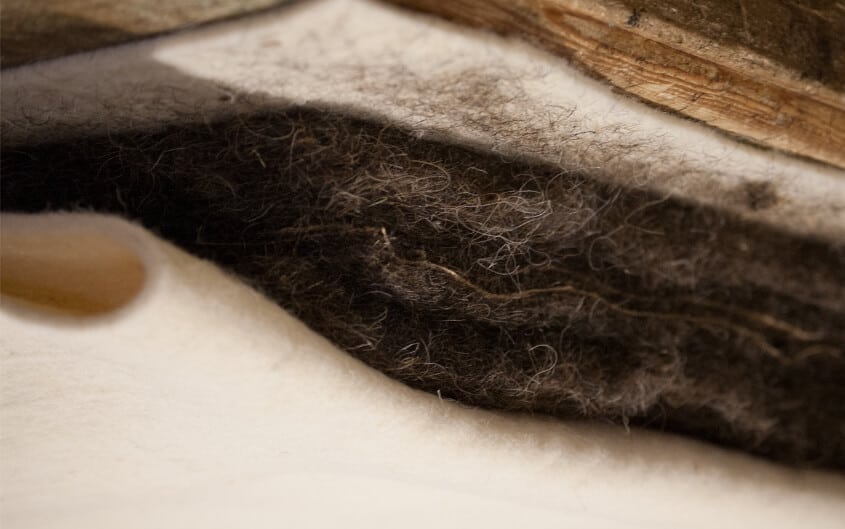
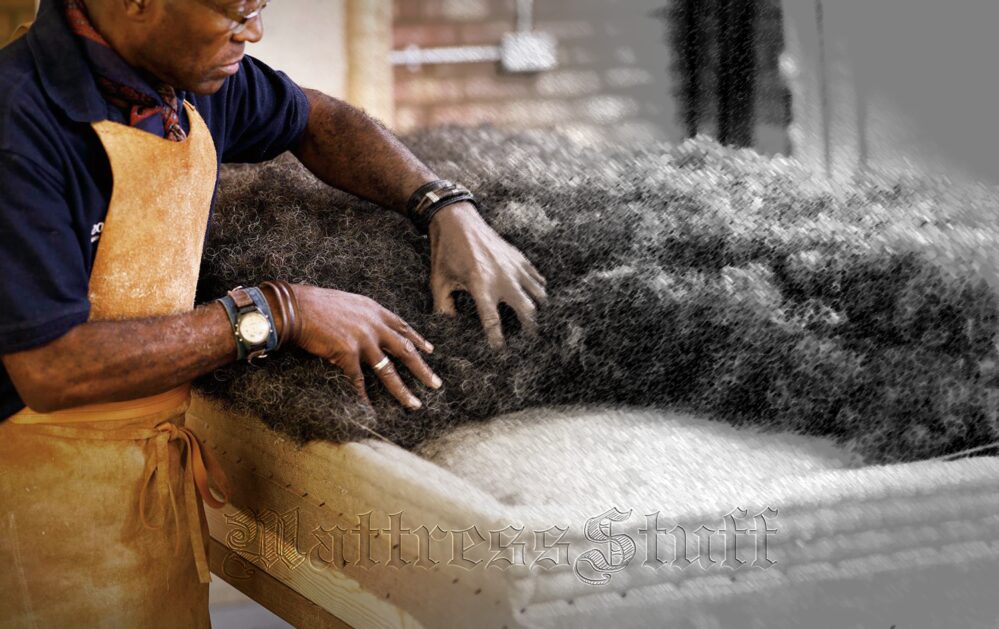
| Wool / Cotton Fiber Padding | Dense fiber batting | Natural, breathable | Compresses over time, less consistent |
⚠️ The Missing Transition Layer Trap
Budget mattresses often skip the transition layer entirely or replace it with low-density polyfoam (under 1.5 lb/ft³). The mattress feels fine for the first three months while the foam is fresh. Then:
- Month 4–6: Low-density foam starts compressing under body weight
- Month 9–12: Visible body impressions form
- Year 2: You can feel the coils or firm support directly through the thin remaining foam
- Year 3: The mattress feels “hollow” and replacement is needed
A proper transition layer prevents this failure cycle almost entirely.
🔍 How to Spot a Good Transition Layer on a Spec Sheet
- Named layer: “Transition layer” or “Support foam” listed distinctly from comfort and core
- Specified thickness: Usually 1.5″–3″
- Specified density: 1.8 lb/ft³ or higher for polyfoam; 4 lb/ft³+ for memory foam transitions
- Specified purpose: Described as supporting the comfort layer or smoothing into the core
- Layer diagram: Brand publishes a cross-section showing the transition clearly
- Only “comfort layer” and “support base” listed — no middle mentioned
- Vague descriptions: “supportive foam layer” with no density or thickness
- Polyfoam density under 1.5 lb/ft³
- Transition layer described as part of the comfort layer rather than separate
- Total listed layer inches adding up to less than the stated mattress height (the hidden layer is the skipped one)
🎯 How Transition Layer Quality Matches Sleeper Type
| Sleeper Profile | Minimum Transition Spec | Why |
|---|---|---|
| Lightweight sleeper (under 150 lb) | 1.5″+ @ 1.8 lb/ft³ polyfoam | Lower body pressure, moderate transition needed |
| Average adult (150–200 lb) | 2″+ @ 1.8–2.0 lb/ft³ | Standard pressure distribution |
| Heavier sleeper (200–250 lb) | 2.5″+ @ 2.0 lb/ft³ polyfoam or latex | Higher pressure demands firmer, thicker transition |
| Heavyweight sleeper (250+ lb) | 3″+ @ 2.2 lb/ft³ or latex | Prevents bottoming out under concentrated load |
| Couples with weight difference | 2.5″+ firm transition | Accommodates the heavier partner without sacrificing comfort for the lighter |
💡 The Premium Transition Layer Trick
Top-tier mattresses (Saatva, Tempur-Pedic premium, Aireloom, some WinkBeds) use a dual transition — two different materials stacked as the transition layer. A common pairing: 1 inch of micro-coils for airflow and responsiveness above 1.5 inches of high-density polyfoam for structural smoothing.
The combination gives you the airflow and bounce benefits of micro-coils and the bottoming-out prevention of dense foam. It adds cost, but it’s the single most meaningful construction upgrade in the $1,500–2,500 price range.
📋 Quick FAQ
For any mattress over 8 inches thick with a plush comfort layer: yes. For very firm mattresses with minimal comfort layers (1 inch or less), the comfort layer and transition function can merge into one. Beyond that, a missing transition layer is a cost-cut.
Q: Can I add a transition layer after purchase?
Not from the outside. A mattress topper sits above the comfort layer, not below it. If your mattress is bottoming out, the only fix is replacement.
Q: Do all-foam mattresses have transition layers?
Yes, the quality ones do. A typical all-foam stack is: cover → memory foam comfort (2–3″) → high-density transition foam (2″) → polyfoam support core (6″). Budget all-foam mattresses often merge the transition into the core, which accelerates sag.
Q: What density polyfoam makes a good transition layer?
1.8 lb/ft³ is the minimum for a reliable transition. 2.0–2.2 lb/ft³ is the sweet spot. Above 2.5 lb/ft³ you’re in premium territory.
Q: How do I know if my current mattress has a failing transition layer?
Classic signs: you can feel the coils or a hard surface under your hips; the mattress has visible body impressions deeper than 1 inch; it felt great new but feels firm and hollow now; foam edges are cracking or crumbling.
🧭 The Middle Layer Is the Middle of the Decision
A great comfort top and a great support core don’t make a great mattress — the middle layer ties them together. Skip the transition, and you’ve bought a beautiful top and a strong base with a hollow between them.
Before you buy, ask the question nobody on the sales floor volunteers: “What’s in the transition layer, and how thick is it?” The answer tells you almost everything you need to know.