Table of Contents
Most mattress sites tell stomach sleepers to buy the firmest mattress they can find. That advice gets it half right and half dangerously wrong. Yes, stomach sleepers need more support than side or back sleepers to prevent lumbar hyperextension — your hips are the heaviest part of your body, and gravity pulls them into a soft mattress while your chest stays elevated, creating a painful spinal arch. But a mattress that’s too firm creates a different problem: it pushes against your ribcage and pelvis with nowhere to redistribute the pressure, leading to numbness, hip pain, and the restless position-shifting that ruins sleep quality.
The sweet spot for stomach sleepers is firm enough to keep your spine neutral, but not so hard that your front-loaded pressure points can’t find relief. This guide identifies the mattresses that thread that needle in 2026, with picks at every price point and body weight.
Top 5 Firm Mattresses for Stomach Sleepers
| Mattress | Price (Queen) | Type | Firmness | Best For |
|---|---|---|---|---|
| WinkBed Firm | $1,149 | Hybrid (coils + foam) | 7.5/10 | Best overall for stomach sleepers |
| Brooklyn Bedding Signature Firm | $665 | Hybrid | 7/10 | Best budget firm hybrid |
| Titan Plus | $699 | Hybrid (reinforced) | 8/10 | Stomach sleepers over 250 lbs |
| Plank Firm | $749 | Foam | 8.5/10 | Ultra-firm preference |
| Saatva Classic Firm | $1,295 | Innerspring (coil-on-coil) | 8/10 | Luxury firm with traditional feel |
Notice that none of these mattresses hits 9 or 10 on the firmness scale. That’s intentional — ultra-firm mattresses designed for floor-sleeping or orthopedic recovery are too rigid for nightly stomach sleeping. The 7–8 range provides the spinal support stomach sleepers need while allowing enough surface give to prevent the pressure problems that make overly-firm beds uncomfortable after the first week.
Why Stomach Sleepers Need Different Firmness Than Everyone Else
In stomach sleeping position, your body weight distributes differently than in any other position. Your pelvis — the heaviest bone structure — presses directly into the mattress while your chest creates a secondary weight zone. On a soft mattress, the pelvis sinks 2–3 inches deeper than the chest, forcing your lumbar spine into hyperextension. Over hours, this creates the lower back stiffness and pain that sends stomach sleepers searching for answers — the connection between your mattress and back problems is especially pronounced in this sleep position.
The right firm mattress keeps your pelvis from sinking past neutral alignment. But here’s what makes the selection tricky: firmness feels different at different body weights. A mattress rated 7/10 feels appropriately firm to a 160-lb stomach sleeper but may feel medium to a 230-lb sleeper whose weight compresses the surface layers more deeply. Our picks account for this by recommending weight-appropriate options — the firmness selection guide explains the full weight-to-firmness relationship.
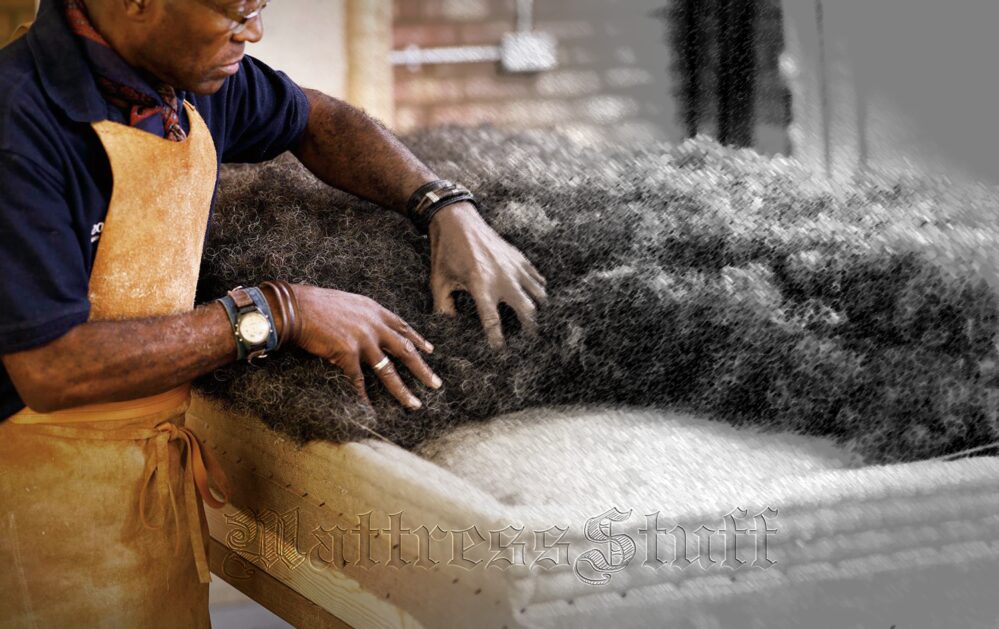

The counterintuitive truth about stomach sleeper firmness: you need more support under your hips and less under your chest. Zoned mattresses that provide variable firmness across their surface handle this better than uniformly firm models, which is why our top pick (WinkBed Firm) uses zoned coils rather than flat uniform firmness.
Detailed Reviews: Matched to Your Profile
WinkBed Firm — Best Overall for Stomach Sleepers
The WinkBed Firm combines a zoned coil system with a thin Euro pillow top that provides just enough surface cushioning to prevent the “sleeping on a board” sensation without allowing hip sink. The zoned construction uses firmer coils in the center third — directly under your pelvis in stomach position — while slightly softer coils at the head and foot allow marginal contouring where stomach sleepers need it least.
At $1,149 for a queen, it sits in the mid-range price tier but delivers construction quality comparable to mattresses $500 higher. The lumbar support pad built into the design specifically targets the stomach sleeper’s weak point: the gap between pelvis and ribcage where soft mattresses create the spinal arch. Free delivery and a 120-night trial give you four months to verify alignment — longer than most competitors offer.
Who it’s for: Stomach sleepers 130–250 lbs who want firm support without sacrificing surface comfort. Who should skip: Pure side sleepers — the firm setting creates shoulder pressure in the lateral position.
Brooklyn Bedding Signature Firm — Best Budget Option
Brooklyn Bedding manufactures their mattresses in their own Arizona factory, cutting out the middleman pricing that inflates most bed-in-a-box brands. The Signature Firm uses 8-inch individually wrapped coils beneath a gel-infused foam comfort layer, delivering hybrid responsiveness at a price point where most competitors offer only all-foam construction.
At $665 for a queen, it’s the best-value firm hybrid on the market. The firmness sits at a true 7/10 — firm enough for stomach sleepers under 200 lbs but potentially insufficient for heavier sleepers who compress through the comfort layer. If your budget is flexible, compare this against the under-$500 options in our budget guide to see where the quality jump from budget to mid-range matters most.
Who it’s for: Budget-conscious stomach sleepers under 200 lbs. Who should skip: Stomach sleepers over 220 lbs who need more resistance to hip sinking.
Titan Plus — Best for Heavy Stomach Sleepers
The Titan Plus was purpose-built for sleepers over 230 lbs, using reinforced TitanCaliber coils and high-density foam layers that resist compression at higher body weights. For stomach sleepers in this weight class, standard firm mattresses often compress enough under pelvic weight to recreate the hip-sinking problem — the Titan’s heavy-gauge construction maintains its firmness rating under loads that soften normal mattresses.
The 8/10 firmness rating holds true even at 300+ lbs, which is rare. Most mattresses rated 8/10 for average-weight testers feel more like 6.5/10 to a 280-lb sleeper. The Titan’s reinforced construction maintains consistent firmness across a wider weight range, making it one of the few mattresses that works as advertised for heavy stomach sleepers without requiring the ultra-firm models that create front-body pressure problems.
Who it’s for: Stomach sleepers 230–400+ lbs who need firm support that doesn’t soften under heavy loads. Who should skip: Sleepers under 200 lbs — the Titan will feel uncomfortably firm, like sleeping on a rigid platform.
Plank Firm — For Ultra-Firm Preference
The Plank is the firmest mattress on our list at 8.5/10, and it’s designed for people who genuinely prefer sleeping on very firm surfaces. It’s a niche product: most stomach sleepers find the 7–8 range optimal, but some — particularly those recovering from back injuries or transitioning from floor sleeping — need that extra rigidity. The Plank offers a flippable design with firm on one side and extra-firm on the other, giving you two firmness options in one mattress.
Who it’s for: Stomach sleepers who’ve tried 7/10 firm mattresses and found them too soft, or those specifically advised by healthcare providers to sleep on very firm surfaces. Who should skip: Most people — ultra-firm mattresses create front-body pressure that disrupts sleep for the majority of stomach sleepers within the first month.
Saatva Classic Firm — Best Luxury Option
The Saatva Classic Firm uses a coil-on-coil innerspring design that creates the traditional firm mattress feel — bouncy, responsive, and supportive without the dense, compressed sensation of firm foam. For stomach sleepers who grew up on traditional innerspring mattresses, this feels familiar in a way that foam and hybrid firms don’t. The dual coil system provides deep support while the thin Euro top adds just enough surface cushioning.
At $1,295 with free white-glove delivery, it’s the premium pick on our list. The white-glove setup eliminates the unboxing and expansion waiting period that foam and hybrid mattresses require — you sleep on it the day it arrives at full firmness. Our detailed Saatva review covers the full lineup, including how the Classic Firm compares to Saatva’s other firmness options.
Who it’s for: Stomach sleepers who want luxury innerspring feel with firm support and prefer professional delivery. Who should skip: Budget shoppers — the Saatva premium is for construction quality and service, not firmness technology you can’t find cheaper elsewhere.
How to Choose the Right Firmness Level
The firmness sweet spot shifts based on your body weight. Here’s the simplified framework:
| Body Weight | Ideal Firmness for Stomach Sleeping | Top Pick |
|---|---|---|
| Under 130 lbs | 6.5–7/10 (medium-firm) | Brooklyn Bedding Signature Firm |
| 130–200 lbs | 7–7.5/10 (firm) | WinkBed Firm |
| 200–250 lbs | 7.5–8/10 (firm+) | WinkBed Firm or Saatva Firm |
| Over 250 lbs | 8–8.5/10 (extra firm) | Titan Plus |
If you sleep in multiple positions — stomach and back, or stomach and side — prioritize firmness for your primary position (the one you fall asleep in), with slight compromise toward the secondary. A combination stomach/back sleeper does well at 7/10. A combination stomach/side sleeper needs 6.5–7/10 to avoid shoulder pressure in the lateral position. The side sleeper guide covers what happens when firm mattresses meet side sleeping — spoiler: it’s usually not great for your shoulders.
What Most People Get Wrong About Firm Mattresses
The most common mistake is equating firmness with support. They’re related but not the same thing. Firmness describes how the surface feels — how much it pushes back against your body. Support describes how the internal structure maintains spinal alignment under load. A mattress can be firm on the surface but lack deep support if its coil system or base foam is inadequate — creating a hard surface that still allows hip sinking under sustained pressure.
The second mistake is buying the firmest mattress available and assuming it’ll be perfect for stomach sleeping. Ultra-firm (9–10/10) mattresses create a flat, unyielding surface that pushes against your pelvis and ribcage symmetrically. This sounds supportive, but it actually forces your neck into awkward rotation angles (since you must turn your head to breathe) and creates pressure concentration at bony contact points. Understanding how sleep positions affect spinal alignment and pain prevention helps explain why moderate firmness outperforms extreme firmness for nightly use.
Your pillow choice matters as much as your mattress for stomach sleeping. A thick pillow elevates your head and extends your neck backward, compounding the lumbar stress that a firm mattress is trying to prevent. Stomach sleepers should use a thin pillow (2–3 inches) or no pillow at all — our pillow guide discusses sleep-position-specific recommendations.
Firm Mattress Types Compared for Stomach Sleepers
The construction type affects how firmness feels in practice, not just how it rates on a scale.
Hybrid (foam + coils): Best all-around choice for most stomach sleepers. Coils provide deep support and airflow while the foam comfort layer prevents the rigid surface feel. All five picks on our list either use hybrid or innerspring construction — that’s not coincidence. Foam-only firm mattresses work but trap more heat and provide less responsive support.
Innerspring: Traditional firm feel with bounce and excellent airflow. Best for stomach sleepers who find foam mattresses too “stuck” feeling. The Saatva Classic Firm represents this category well. The key features that relieve back pain are often found in well-designed innerspring models.
All-foam firm: Dense and motionless — good for motion isolation (couples where one person tosses) but runs warmer and provides less responsive support than coil-based alternatives. The Plank is the best example on our list. Stomach sleepers who run hot should avoid all-foam firm mattresses unless they add cooling accessories — our cooling guide explains why.
Latex: Naturally firm and bouncy with excellent durability and temperature neutrality. Not represented in our top 5 because latex firm mattresses are less common and pricier, but they’re worth exploring if you prefer natural materials and can spend $1,500+. Check the main mattress guide for latex options in the overall rankings.
FAQ
Should stomach sleepers ever consider a medium mattress instead of firm?
Yes — specifically stomach sleepers under 130 lbs. At low body weights, your pelvis doesn’t generate enough force to sink into a medium mattress far enough to cause spinal misalignment. A medium (5–6/10) mattress provides adequate support for lightweight stomach sleepers while offering better comfort at front-body pressure points. The risk increases with weight: above 150 lbs, most stomach sleepers need at least a 6.5/10 firmness to maintain neutral spine position.
Can a mattress topper make a medium mattress work for stomach sleeping?
No — toppers add cushioning on top, but they can’t add support underneath. If your mattress sinks at the hips, a firm topper won’t fix the underlying support problem. In fact, a topper on an already-too-soft mattress raises your sleeping surface further from the support layer, potentially worsening alignment. If your current mattress is too soft for stomach sleeping, replacement is the right solution. A topper only helps if your mattress provides adequate support but feels too rigid at the surface — then a thin (1–2 inch) firm topper adds minor cushioning without undermining support.
Why do I wake up with lower back pain even on a firm mattress?
Three possible causes. First, your mattress may be firm but not supportive — surface firmness without adequate coil or base support still allows gradual hip sinking overnight. Second, your pillow may be too thick, creating neck extension that cascades into lumbar stress. Third, you may need a different type of firmness — latex firm and foam firm feel different despite rating the same on firmness scales, and one may align your spine better than the other. The posture and sleep quality guide covers how mattress and pillow work together for spinal health.
Is stomach sleeping inherently bad for your back, regardless of mattress choice?
Sleep researchers generally consider stomach sleeping the least ideal position for spinal health because it requires neck rotation and tends toward lumbar extension. However, “least ideal” doesn’t mean harmful for everyone — many lifelong stomach sleepers have zero back problems because their mattress and pillow setup maintains alignment. The right firm mattress with a thin pillow minimizes the biomechanical disadvantages. If you experience persistent pain despite mattress optimization, transitioning to side sleeping may help — but forcing a position change often disrupts sleep quality more than it improves spinal health.
Do firm mattresses get softer over time, and will that hurt stomach sleepers?
Yes, all mattresses soften with use. Foam comfort layers compress 10–20% within the first year as cell structures break in, and coils gradually lose some tension. For stomach sleepers, this softening can recreate the hip-sinking problem the firm mattress was purchased to solve. The timeline varies by construction quality: budget firm mattresses may feel noticeably softer by year 2, while premium hybrids maintain their firmness rating for 5–7 years. Choosing a mattress that starts slightly firmer than your ideal gives you a buffer for this natural softening.
Can couples use a firm stomach sleeper mattress if only one person sleeps on their stomach?
It depends on the other person’s position. A firm mattress works for back sleepers too, so stomach/back couples are fine. Stomach/side sleeper couples have a genuine conflict — firm mattresses create shoulder and hip pressure for side sleepers. Solutions include split-firmness mattresses (each side with different coil firmness), using a mattress topper on one side only, or choosing a medium-firm compromise at 6.5/10. The couples mattress guide covers this exact scenario in depth.
Final Verdict
The WinkBed Firm wins our top recommendation because its zoned coil system addresses the stomach sleeper’s core problem — hip sinking — more precisely than uniformly firm competitors. The targeted lumbar support keeps your pelvis elevated while the thin Euro top prevents the rigid, uncomfortable surface that drives most people away from firm mattresses within the first month.
For stomach sleepers on a budget, the Brooklyn Bedding Signature Firm at $665 delivers hybrid construction and reliable firmness at a price point where most brands cut corners. For heavier stomach sleepers, the Titan Plus at $699 is the rare mattress that maintains its firmness rating under loads that would soften any standard firm mattress.