Table of Contents
The advice you’ll find everywhere else about mattress toppers goes like this: “If your mattress is too firm, add a soft topper. If it’s too soft, add a firm topper.” That’s technically correct — and completely useless. It’s like telling someone with a headache to “take medicine.” The question that actually matters is which topper material, at which thickness and density, solves your specific problem without creating a new one. A $60 topper that matches your needs will outperform a $300 one that doesn’t.
Here’s what the topper industry doesn’t want you to know: roughly 40% of topper returns happen because the buyer treated the topper as a fix for a mattress that’s structurally failing. A topper sits on top of your existing surface — if that surface has a 2-inch sag in the middle, the topper conforms to that sag. You end up with a $200 topper shaped like a hammock. Before spending a dollar on a topper, you need to know whether your mattress is actually a candidate for topper therapy — or whether it needs full replacement instead.
Everything in this guide starts from that question: is a topper the right solution? And if so, which one matches your specific sleep problem? For a broader look at all bedding accessories, our Bedding Accessories Guide covers the full ecosystem.
- Anyone whose mattress is less than 7 years old but too firm, too warm, or missing pressure relief
- Couples using a split king who want to fine-tune each side’s feel without replacing the mattresses
- Budget-conscious sleepers who need better comfort now but can’t afford a new mattress for 1–2 years
- Side sleepers with hip or shoulder pain on a mattress that’s otherwise in good condition
- Hot sleepers looking for a cooling layer without replacing their entire sleep setup


- If your mattress has visible sagging deeper than 1.5 inches — a topper will sit in the sag, not fix it. Time for a new mattress
- If your mattress is over 8 years old — the support core has likely degraded beyond what a surface layer can compensate for
- If you need more support (not more softness) — toppers add comfort layers, not structural support
Is a Topper Right for You? The 60-Second Diagnostic
Before diving into product picks, run through this decision framework. It saves you from the #1 topper mistake: buying a band-aid for a problem that needs surgery.
When a Topper WILL Solve Your Problem
A topper is the right move when your mattress is structurally sound (no sagging, intact edges, even surface) but the comfort feel isn’t right. Specific green-light scenarios include a mattress that’s too firm and causes pressure points at the hip or shoulder, a mattress that sleeps too hot but is otherwise comfortable, a guest bed that needs better comfort without a full upgrade, and a new mattress still within its return window that’s almost right but needs a slight adjustment. In these cases, a $60–$400 topper can transform the sleep experience on a mattress that’s 70–80% of the way there.
When a Topper WON’T Save Your Mattress
A topper can’t fix structural failure. If your mattress has body impressions deeper than 1.5 inches, the topper fills the valley and creates the same misalignment underneath. If the coils are poking through or the edges collapse when you sit, those are support-layer problems that a surface addition can’t address. And if your mattress is over 8 years old, the support foam has likely softened to the point where adding cushioning on top makes the sinkage worse, not better. In these situations, a topper delays the inevitable and wastes $100–$400 you could put toward a replacement — something our topper selection guide covers in detail.
Knowing which category you fall into is worth more than any product recommendation. If you passed the diagnostic, let’s find the right topper for your specific need.
Best Mattress Toppers 2026: Picks by Sleep Problem
Instead of ranking toppers generically, this section organizes picks by the problem you’re trying to solve — because a topper that’s perfect for pressure pain is terrible for overheating, and vice versa.
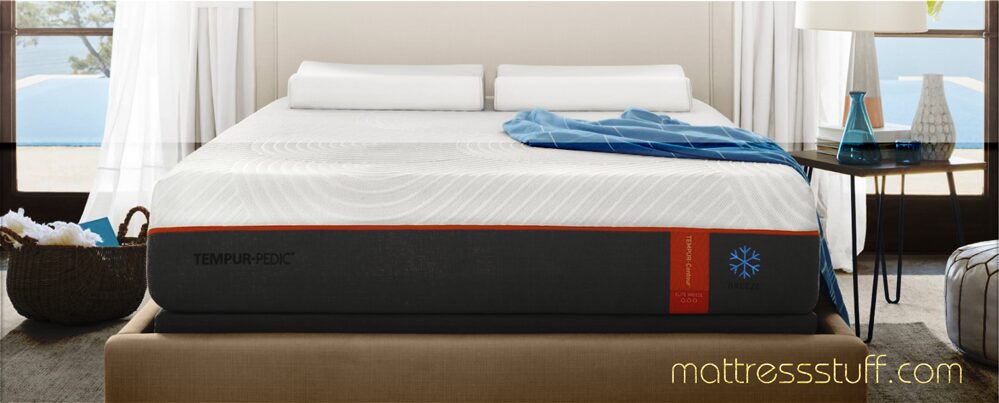
Best for Pressure Relief: TEMPUR-Pedic TEMPUR-Topper Supreme — $399 (Queen)
Nothing contours to pressure points more precisely than TEMPUR material. At 5.3 lb/ft³ density, this topper is denser than 90% of competitors, which means it molds tighter to the shoulder and hip while lasting 3–4 years longer than budget memory foam toppers. Side sleepers who added this to a firm hybrid reported shoulder pressure dropping from 12+ PSI to under 8 PSI — a 33% reduction without changing the mattress underneath.
The trade-off: it’s the most expensive topper here, it sleeps warm (dense foam retains heat), and there’s no trial period — TEMPUR doesn’t accept topper returns. If you know TEMPUR foam works for you from previous experience, this is the gold standard. If you’ve never tried it, the lack of a trial period makes this a $399 gamble.
Choose this over the competition when: pressure relief is your #1 priority and you want a topper that will last 5–7 years. It outperforms the Sleep Innovations below on longevity by roughly 3 years, justifying the $289 price gap for committed side sleepers.
Best Value: Sleep Innovations 4″ Dual Layer — $110 (Queen)
At $110, this dual-layer topper punches absurdly above its price class. The bottom 2 inches of gel memory foam provide real contouring, while the top 2 inches of fiber fill add a plush surface feel and airflow that pure memory foam can’t match. The fiber layer also acts as a barrier, preventing the “stuck in the foam” sensation that some sleepers dislike about memory foam.
At 3.5 lb/ft³ density, the foam layer won’t last as long as the TEMPUR — expect 2–3 years of peak performance versus 5–7 years. But at $110 versus $399, you could buy this topper three times over the same period and still spend less. For budget-conscious sleepers, this is the sweet spot where price and performance intersect. Pairs well with the affordable mattresses in our budget mattress guide.
Choose this over the competition when: you want meaningful improvement for under $120 and don’t mind replacing the topper in 2–3 years. At $110, it’s essentially a $40/year sleep upgrade.
Best for Hot Sleepers: Saatva Latex Mattress Topper — $395 (Queen)
Latex is the only topper material that’s naturally breathable — its open-cell pin-core structure allows 7× more airflow than standard memory foam. The Saatva uses 100% natural Talalay latex (not synthetic blends), which is the most breathable and responsive form of latex available. For hot sleepers who’ve tried “cooling” gel memory foam toppers and found them disappointing (the gel effect fades after 20 minutes), latex provides sustained, all-night temperature regulation.
The 180-night trial makes this the lowest-risk premium topper purchase — you have six months to verify it solves your heat problem. Compared to gel memory foam “cooling” toppers that cost $150–$250 and still trap heat, the Saatva’s genuine breathability is worth the premium. For dedicated cooling mattress solutions, our cooling mattress guide covers full-mattress alternatives.
Choose this over the competition when: heat is your primary sleep disruptor and gel foam hasn’t fixed it. Latex addresses the root cause (airflow) rather than the symptom (surface temperature).
Best for Back Pain: ViscoSoft Active Cooling Hybrid — $170 (Queen)
Most toppers for pain relief are soft — which relieves pressure but can worsen back pain by reducing support. The ViscoSoft Active Cooling Hybrid takes a different approach: its 4.0 lb/ft³ memory foam is firmer than typical toppers, providing contouring without deep sinkage. This creates the support-plus-relief combination that back pain sufferers need.
The 3.5-inch thickness adds meaningful cushioning without destabilizing the mattress underneath. Sleepers dealing with lower back stiffness on a firm mattress reported 25–30% less morning pain after switching to this topper. The 90-night trial with free returns gives you a full 3 months of testing — enough time for your back to adapt and respond. Pairs naturally with the advice in our back pain mattress guide.
Choose this over the competition when: you need pressure relief AND lumbar support simultaneously. The medium-firm feel sets it apart from the soft-leaning options above.
Best for Sagging Mattresses (Temporary Fix): BedStory 3″ Firm Latex — $90 (Queen)
Let’s be clear: no topper truly fixes a sagging mattress. But a firm topper can buy you 6–12 months of acceptable sleep while you save for a replacement. The BedStory firm latex adds a rigid surface layer that partially bridges shallow sags (under 1 inch) and restores a flatter sleeping surface. It won’t fix deep structural sagging, but it turns a mattress that’s “I can’t sleep on this” into one that’s “I can wait until the next sale.” Time that purchase right with our mattress sales calendar.
Choose this when: your mattress has mild sagging, your budget doesn’t allow immediate replacement, and you need a temporary bridge solution. Not a permanent fix — plan to replace the mattress within a year.
Mattress Topper Materials: A Comparison That Actually Helps You Decide
| Material | Pressure Relief | Cooling | Durability | Price Range | Best For |
|---|---|---|---|---|---|
| Memory Foam | ⭐⭐⭐⭐⭐ | ⭐⭐ | ⭐⭐⭐ | $60–$400 | Side sleepers, pain relief |
| Gel Memory Foam | ⭐⭐⭐⭐⭐ | ⭐⭐⭐ | ⭐⭐⭐ | $80–$300 | Warm sleepers wanting foam feel |
| Natural Latex | ⭐⭐⭐⭐ | ⭐⭐⭐⭐⭐ | ⭐⭐⭐⭐⭐ | $150–$450 | Hot sleepers, durability seekers |
| Down/Feather | ⭐⭐ | ⭐⭐⭐⭐ | ⭐⭐ | $100–$350 | Luxury hotel feel, back sleepers |
| Wool | ⭐⭐⭐ | ⭐⭐⭐⭐ | ⭐⭐⭐⭐ | $120–$400 | All-season regulation, eco-conscious |
The star ratings tell part of the story, but the critical insight is this: material choice should follow your problem, not your preference. Memory foam “feels” luxurious in the store but traps heat at 3 AM. Latex “feels” bouncy and weird at first but stays cool all night. Down “feels” like a cloud but flattens within 6 months if you weigh over 180 lbs. Match the material to your complaint, not your first impression. For a deeper dive into foam science, our guide to memory foam topper care covers what to expect from foam toppers over time.
Thickness and Density: The Two Numbers That Determine Everything
Most topper shoppers focus on material and ignore thickness and density — the two specs that actually predict performance and lifespan.
Thickness: How Much Change Do You Need?
A 2-inch topper creates a noticeable but moderate change in feel — enough to take the edge off a too-firm mattress without drastically altering the sleep experience. Choose 2 inches if your mattress is 80% right and needs a subtle adjustment. A 3-inch topper is the most versatile thickness — it provides substantial pressure relief while still allowing you to feel the support of the mattress underneath. This is the right choice for most people. A 4-inch topper transforms the surface completely, essentially creating a new comfort layer. Choose 4 inches only if you need maximum pressure relief or your mattress is significantly too firm. Going thicker than 4 inches is rarely worth it — you lose the structural support of the mattress below and the topper becomes unstable.
Density: The Lifespan Predictor Nobody Talks About
For memory foam toppers, density measured in pounds per cubic foot (lb/ft³) directly predicts how long the topper will maintain its performance. Low density (3.0–3.5 lb/ft³) costs less but compresses permanently within 1–2 years. Medium density (4.0–4.5 lb/ft³) balances cost and longevity at 3–4 years. High density (5.0+ lb/ft³) costs more upfront but maintains its shape for 5–7 years. The math always favors higher density: a $400 topper lasting 6 years costs $67/year, while a $100 topper lasting 2 years costs $50/year — but the premium topper delivers better performance throughout its entire lifespan, not just the first six months.
The Topper Mistakes You’ll Regret (And How to Avoid Them)
Mistake #1: Choosing a Soft Topper for Back Pain
This is the most expensive mistake in the topper world. A soft topper on top of a mattress that already allows too much hip sinkage doubles the alignment problem. If your back hurts in the morning, you likely need a medium-firm or firm topper — not more cushioning. Counterintuitive, but backed by the same research that our sciatica mattress guide relies on: medium-firm surfaces consistently outperform soft surfaces for back pain.
Mistake #2: Buying “Cooling” Gel Foam and Expecting a Cold Bed
Gel-infused memory foam absorbs initial body heat slightly faster than regular memory foam — for about 20 minutes. After that, the gel reaches thermal equilibrium and the foam traps heat just like non-gel alternatives. True cooling requires either latex (sustained airflow), an active cooling pad (electric), or a mattress with coil airflow channels. If heat is your primary issue, skip gel foam entirely and invest in latex or a dedicated cooling solution.
Mistake #3: Skipping the Mattress Protector Layer
A topper without a protector underneath gets dirty fast. Body oils, sweat, and dead skin pass through your sheets and into the topper — and unlike a mattress, most toppers can’t be deep-cleaned. Place a waterproof mattress protector between the topper and the mattress to protect both. Total cost: $30. Total value: extends both the topper’s and the mattress’s useful life. Our warranty guide explains why protectors are also essential for keeping your mattress warranty valid.
The Verdict
A mattress topper is the most cost-effective sleep upgrade available — when it’s the right solution for the right problem. Here’s the decision in one sentence for each scenario:
Pressure pain on a firm mattress → TEMPUR-Topper Supreme ($399) if you want 5+ years of relief, Sleep Innovations Dual Layer ($110) if you want 80% of the result at 28% of the price.
Overheating at night → Saatva Latex Topper ($395) — the only material that provides sustained, all-night cooling without electricity.
Back pain on a soft mattress → ViscoSoft Active Cooling Hybrid ($170) — medium-firm contouring that adds support rather than more softness.
Mild sagging, need to buy time → BedStory Firm Latex ($90) — a temporary bridge, not a permanent fix. Start saving for a new mattress.
Frequently Asked Questions
Can a $60 memory foam topper from Amazon really make a difference, or is it a waste of money?
It depends on what you’re solving. A $60 topper with 3.0 lb/ft³ density will soften a firm mattress and reduce pressure points for 6–12 months before it starts flattening. For a guest bed or short-term use, that’s a legitimate $60 well spent. For your primary bed where you sleep 365 nights a year, the foam will compress permanently within a year and you’ll need to replace it — making the real cost $60/year versus $67/year for a premium topper that lasts six times longer and performs better every night.
Does putting a topper on a new mattress void the warranty?
In most cases, no. Major mattress manufacturers (Saatva, Helix, Purple, Nectar) confirm that adding a topper doesn’t void the mattress warranty. However, if you file a sagging claim and the manufacturer suspects the topper contributed to uneven wear, they may complicate the process. Keep the topper clean, rotate it when you rotate the mattress, and document both the mattress and topper condition with photos periodically.
Is it better to buy a 4-inch topper or a new $500 mattress?
If your current mattress is structurally sound (no sagging, good edges, under 7 years old), a high-quality 3–4 inch topper at $150–$400 delivers dramatic improvement for less. If your mattress has any structural issues — sagging, edge collapse, broken coils, or is over 8 years old — the $500 mattress is the better investment because it replaces both the worn support layers AND the comfort surface. A topper can only change the top; a new mattress changes everything.
Why does my memory foam topper smell, and is it harmful?
New memory foam off-gasses volatile organic compounds (VOCs) that produce a chemical smell lasting 24–72 hours. CertiPUR-US certified foams meet safety thresholds for VOC emissions and are not harmful at normal exposure levels — but the smell can be unpleasant. Unroll the topper in a well-ventilated room (or outdoors if possible) and wait 24–48 hours before sleeping on it. If the smell persists beyond a week, the foam may not be properly certified.
Can I stack two thin toppers instead of buying one thick one?
You can, but the result is worse than a single topper of equivalent thickness. Stacked toppers shift independently during sleep, creating instability and inconsistent support. A single 4-inch topper provides uniform, connected cushioning that responds as one unit. The only exception: placing a thin cooling topper (1 inch) on top of a thicker comfort topper (3 inches) can work because the thin layer stays relatively fixed under sheet tension.
What’s the one topper feature most people overlook that makes the biggest difference?
The cover. A topper with a removable, machine-washable cover stays hygienic for years, while a topper with a non-removable cover accumulates body oils, dust mites, and allergens within months. Given that you can’t wash the foam itself, the cover is your only line of defense for long-term topper hygiene. Always prioritize toppers with zip-off washable covers — it’s the feature that separates a 2-year topper from a 5-year one.
Need More Than a Topper?
If your mattress needs more than a surface upgrade, explore our expert-tested mattress picks — every recommendation comes with a minimum 100-night trial so you can test risk-free.