Table of Contents
Quick Answer: High-Resilience foam (HR foam) and memory foam are both polyurethane foams, but they behave like opposite materials in a mattress. HR foam is engineered for rapid rebound — it bounces back in under a second, stays cool, and produces a responsive “on top of the bed” feel. Memory foam is viscoelastic — it softens with body heat, molds slowly to contours, and produces the signature “hugging” cradle that takes 10–30 seconds to fully form. HR foam beats memory foam on response speed, cooling, durability (10–12 years vs 6–10), and ease of movement; memory foam beats HR on pressure-point contouring, motion isolation, and deep-sink sensation. The choice is not about which is better — it is about which feel matches your body and sleep style.
Why This Matters Today
Memory foam dominates mattress marketing, but HR foam quietly delivers longer lifespan, cooler sleep, and easier movement in a category of beds that the average shopper doesn’t know exists. Learning when HR foam is actually the better engineering choice — and when classic viscoelastic memory foam still wins — lets buyers escape the false binary of “foam or coils” and find the best feel for their specific body on the first purchase.
⚡ TL;DR — Key Takeaways
- Traditional innerspring mattresses are making a comeback for bounciness
- Bonnell coils (hourglass shape) are cheapest and noisiest
- Offset coils fold-interlock for better motion control
- Continuous coils are one wire — firm and noisy
- Innerspring wins for cooling and bounciness, loses on motion isolation
What High-Resilience Foam Actually Is
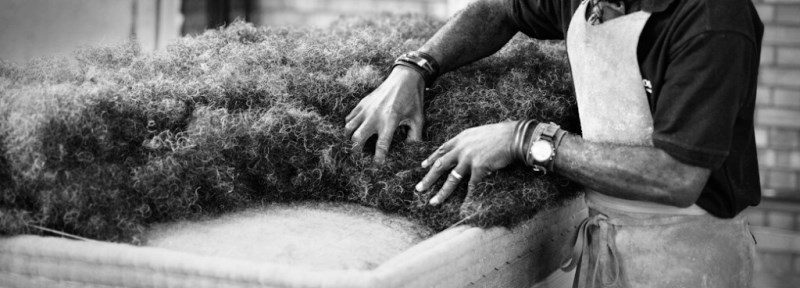
HR foam is a grade of polyurethane foam engineered for rapid rebound and responsive feel. The polymer chemistry is tuned so the foam returns to its original shape quickly after compression — typically within 0.5–1 second. HR foam density is at least 2.5 lb/ft³, with premium grades reaching 3.0–4.0 lb/ft³, and cell structure is always open-cell for maximum breathability.
The HR Response Signature
Press into HR foam and it pushes back — you feel buoyant support rather than slow sinking. This is the same feel that latex delivers, and HR foam is often marketed as a “latex-alternative” foam at lower cost. The rapid rebound means HR foam does not form a body cradle; it supports the body evenly across the contact surface.
What Memory Foam Actually Is
Memory foam is a viscoelastic polyurethane foam — meaning it has both viscous and elastic properties. Under body heat, the polymer chains soften and flow like a thick liquid, letting the foam mold to contours. When the heat source is removed, the chains gradually stiffen back and the foam recovers its shape over 15–30 seconds.
The Memory Foam Hugging Feel
The signature feel of classic memory foam is immersion — the sense of being cradled rather than supported from beneath. This feel is produced by the viscoelastic response, which cannot be replicated in HR foam regardless of density or firmness. For sleepers who specifically want to feel “in” the mattress rather than “on” it, memory foam is the only foam choice that delivers.
Direct Comparison
The two foam categories differ across nearly every performance metric, and the choice between them is a choice between two coherent feel philosophies.
| Property | HR Foam | Memory Foam |
|---|---|---|
| Rebound speed | Under 1 second | 10–30 seconds |
| Feel | Buoyant, on-top | Hugging, in-bed |
| Temperature sensitivity | Neutral — same at all temps | Softens with body heat |
| Cooling behavior | Cooler — open-cell standard | Warmer without additives |
| Pressure-point contouring | Moderate | Exceptional |
| Motion isolation | Good | Exceptional |
| Movement ease | Easy to change position | Slow to disengage |
| Typical lifespan | 10–12 years | 6–10 years |
| Price per layer | Mid-tier | Mid to premium tier |
🔑 Key Insight: If you regularly change sleep positions — side to back to side — HR foam makes those transitions effortless. Memory foam resists position changes because the cradle must re-form each time, which can disturb partners and self-wake some sleepers.
Which Sleepers Benefit From HR Foam
HR foam is the better choice for sleepers who value rapid positional change, cooler sleep, longer mattress lifespan, and a supportive rather than immersive feel. Back sleepers with lumbar-support priorities benefit from HR foam’s even pushback. Hot sleepers benefit from HR foam’s open-cell breathability. Combination sleepers benefit from the effortless position transitions.
HR Foam and Back Pain
For many sleepers with lumbar back pain, HR foam provides better support than memory foam because the faster rebound prevents the lumbar from sinking below spinal alignment. Memory foam’s slow response allows the pelvis to sink faster than the shoulders, which can produce U-shaped spinal misalignment — the opposite of pressure relief.
Which Sleepers Benefit From Memory Foam
Memory foam is the better choice for sleepers who prioritize pressure-point relief, motion isolation, and deep contouring feel. Side sleepers with hip and shoulder pressure concerns benefit from memory foam’s exceptional pressure distribution. Couples with one restless sleeper benefit from motion isolation that prevents partner movement from transmitting across the bed.
Memory Foam and Side Sleeping
Side sleeping concentrates body weight on two narrow contact zones — the shoulder and the hip. Memory foam’s contouring response lets these points sink into the foam while the waist and thigh are supported, keeping the spine aligned. HR foam’s even pushback can create pressure-point discomfort at the shoulder and hip for side sleepers above roughly 170 lbs.
🚩 Red Flag: A mattress sold as “memory foam” that rebounds in under 3 seconds is probably HR foam marketed under the wrong name, or low-density memory foam that will impression-sag within 3 years. True memory foam recovers slowly by design.
Durability Math
HR foam consistently outlasts memory foam in compression testing. At comparable densities, HR foam loses 4–6% of original height over 60,000 compression cycles, while memory foam typically loses 6–10%. For practical mattress lifespan, HR foam’s durability advantage translates to 2–3 additional years of usable life before warranty-threshold body impressions appear.
Why HR Lasts Longer
The rapid rebound that defines HR foam comes from a polymer structure that resists deformation more efficiently than viscoelastic chains. Each compression cycle recovers more fully in HR foam than in memory foam, so residual permanent deformation accumulates more slowly. Over thousands of cycles, this efficiency advantage compounds into years of extended lifespan.
Hybrid Construction: The Layered Solution
Modern premium mattresses increasingly combine both foams rather than choosing one. A common high-quality stack uses 2 inches of open-cell memory foam at the top for pressure relief, 2 inches of HR foam below for responsive transition, then pocketed coils or HD polyfoam for support. This layered approach captures both the hugging feel and the rapid rebound, with each material in its ideal position.
✅ Green Flag: A mattress that specifies both memory foam and HR foam in different positions shows that the brand understands the strengths of each material. Generic “foam comfort layers” language without distinguishing the foam types often signals budget-grade polyfoam.
Cooling Engineering
HR foam is inherently cooler than memory foam because of its open-cell structure and temperature-neutral chemistry. Memory foam requires gel infusion, copper, graphite, or PCM treatments to approach HR foam’s baseline cooling performance. For hot sleepers, HR foam offers cooler sleep without requiring additives — a meaningful simplification.
The Open-Cell Advantage
HR foam is almost universally open-cell. This dual advantage — HR polymer chemistry plus open-cell structure — produces foam that breathes continuously and does not trap heat. The cooling is passive, continuous, and does not saturate like gel infusion.
Frequently Asked Questions About HR Foam vs Memory Foam
Q1: Is HR foam the same as latex?
No, but it feels similar. HR foam is petroleum-based polyurethane; latex is rubber-tree-derived (or synthetic SBR). Both offer rapid rebound and open-cell breathability, but latex is more durable and natural; HR foam is cheaper.
Q2: Does HR foam offer pressure relief?
Moderate. HR foam distributes weight evenly across the contact surface, which provides pressure relief for lighter-body sleepers. Heavier sleepers or side sleepers with concentrated pressure points often prefer memory foam’s deeper contouring.
Q3: Can I tell HR foam from memory foam without buying?
Yes. Press your palm into the foam for 5 seconds and lift. HR foam recovers immediately; memory foam retains your handprint for 10–30 seconds before slowly recovering.
Q4: Is HR foam worth the price premium over standard polyfoam?
In the comfort layer, yes — HR foam’s longer lifespan and better rebound justify the cost over 10 years of use. In deep structural layers, HD polyfoam at lower density often delivers adequate support at lower cost.
Q5: Do HR foam mattresses off-gas less than memory foam?
Similar profiles. Both are polyurethane foams with similar VOC emissions. Off-gassing duration depends more on CertiPUR-US certification and bedroom ventilation than on HR versus memory designation.
The Verdict on HR Foam vs Memory Foam
HR foam and memory foam are two coherent feel philosophies, not two quality tiers. Choose HR foam for rapid rebound, cooler sleep, longer lifespan, and responsive on-top-of-bed feel — ideal for combination sleepers, hot sleepers, and back sleepers with lumbar priorities. Choose memory foam for pressure-point contouring, motion isolation, and deep hugging sensation — ideal for side sleepers and couples. For the most balanced feel, choose a layered hybrid that places memory foam in the top comfort position over HR foam in the transition layer, capturing both experiences in a single bed.