Table of Contents
Related: best mattresses of 2026
Related: top mattress brands compared
Related: innerspring vs hybrid vs memory foam
Related: organic vs regular mattress
Related: best adjustable bed frames
Related: mattress sizes guide
Related: king vs queen mattress
Related: best hybrid mattress
Related: mattress in a box vs traditional
Related: best mattress toppers
>Introduction:
- A comfortable and supportive mattress is essential for a good night’s sleep, but the foundation on which it sits plays a crucial role in providing support and stability. See our memory foam vs latex topper.
- In this article, we will explore the different types of mattress foundations available, their compatibility with different types of mattresses, and provide tips on how to choose the right foundation for your needs.
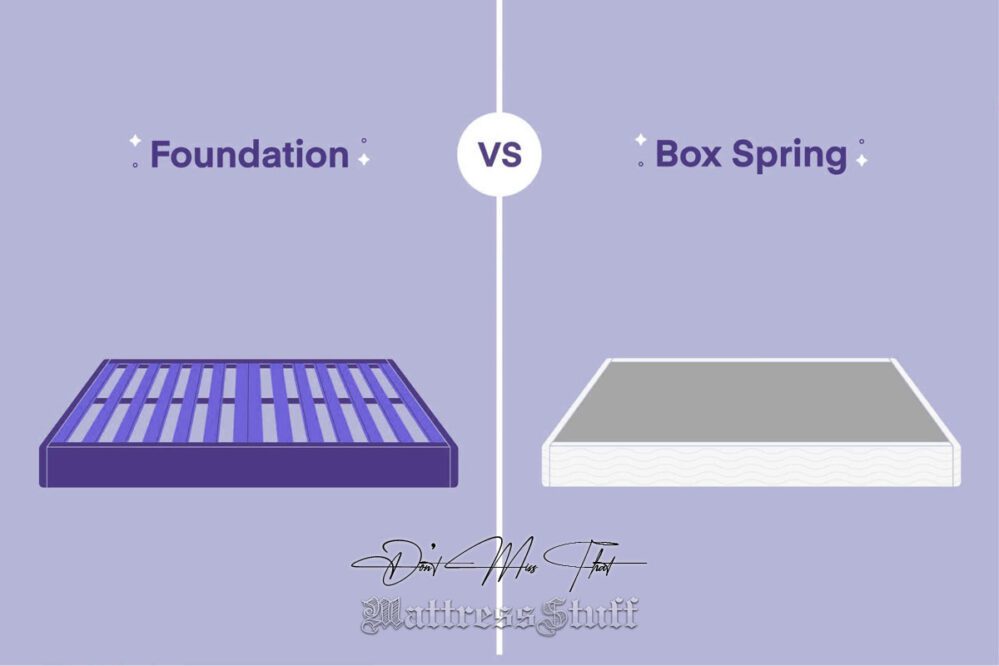
Types of Mattress Foundations
· Box spring:
A traditional foundation that typically consists of a wooden frame and coils, designed to provide support and absorb shock for the mattress.
· Platform base:
A modern foundation that typically consists of a flat, solid surface, designed to provide support and stability for the mattress.
· Slatted base:
A foundation that consists of a flat surface with slats, designed to provide support and ventilation for the mattress.
· Adjustable base:
A foundation that allows you to adjust the position of the mattress, typically with the use of a remote control, designed to provide comfort and support for people with certain health conditions.
Compatibility with Different Types of Mattresses
- Box springs are typically used with traditional innerspring mattresses, while platforms are often used with foam mattresses, particularly memory foam and latex foam.
- Slatted bases are suitable for use with any mattress type, but it is important to ensure that the slats are close enough together to provide adequate support.
- Adjustable bases are compatible with a wide range of mattresses, including memory foam, latex, and innerspring, but it is important to check the manufacturer’s recommendations before purchasing.
How to Choose the Right Foundation
Consider your personal preferences and needs, such as whether you prefer a traditional or modern look, or if you have any health conditions that may require an adjustable base.
Take into account the size and weight of your mattress, as well as the size of your bedroom and the overall aesthetic you wish to achieve.
Consider the price and durability of the foundation, as well as any warranties or guarantees offered by the manufacturer.
Conclusion:
Choosing the right mattress foundation can greatly enhance the comfort and support of your mattress, leading to a better night’s sleep.
By understanding the different types of foundations available and their compatibility with different types of mattresses, you can make an informed decision that best suits your needs.
Key Factors to Consider
When evaluating any mattress-related decision, understanding your personal sleep needs is the essential starting point. Your sleeping position determines which areas of your body need the most pressure relief and support — side sleepers need extra cushioning at the shoulders and hips, back sleepers require balanced support along the entire spine, and stomach sleepers benefit from a firmer surface that prevents the midsection from sinking too deep. Beyond position, factors like body weight, temperature preferences, and whether you share the bed with a partner all influence which products, materials, and configurations will deliver the best sleep experience for your situation.
Making an Informed Purchase Decision
The mattress industry has evolved dramatically in recent years, with direct-to-consumer brands, sleep trial periods, and online shopping fundamentally changing how people buy sleep products. Take advantage of these consumer-friendly developments by comparing options across multiple brands before committing. Look for brands that offer risk-free trial periods of at least 100 nights, as this gives you adequate time to evaluate comfort and support in your own sleeping environment. Read reviews from verified purchasers, paying special attention to feedback from people with similar sleep profiles (body type, position, preferences) to your own. And remember that the most expensive option is not always the best — many mid-range products deliver comparable quality to premium alternatives by saving on retail overhead and marketing costs rather than material quality.