Table of Contents
While choosing the right mattress is important for back pain relief, how you position yourself on that mattress matters just as much. This guide covers practical position adjustments and mattress modifications that can reduce back pain starting tonight.
Best Mattress for Back Pain
A large part of the population has, or will suffer from some form of back pain at some time in their lives. The bed you sleep in plays a major part in helping your body to recover. Support and comfort are two important assets of the best mattress for back pain. See our best mattresses of 2026.
There is a wide range of orthopedic psychiatrists on the market today, all promising to support your neck and spinal and alleviate back problems. But do they work? The best mattress for you will be different from the best mattress for your wife or neighbor. Everyone’s bodies are different so you need to follow some basic common principals when choosing a mattress.
Here are some of the most popular designs.
Memory Foam Mattresses
These types of mattress, made using technology developed by NASA, are made of a viscoelastic material that is temperature sensitive. When you lie on it and your body warms the mattress, it will soften around the contact areas and mold to the contours of your body.
If you are a heavy person, you might do well to consider a memory foam mattress topper, that can be used on top of your firm mattress. For the lightweight person, a complete memory foam mattress may suit you better. The heavy person can get good support from their firm bed, with the benefits of memory foam over the top.
Latex Foam Mattresses
Latex mattresses are a very popular model, also molding well to your bodies contours, but they do this through the open cell structure of this natural material. Latex is a tree sap from a rubber tree so is natural as well as effective. A latex mattress usually consists of a density of 4 pounds or so and is not too firm or too soft. They are very popular back pain sufferers.
These are just a couple of the mattresses for back pain. Both are good. check out our website for more details.
Related: top mattress brands compared
Related: best mattresses for back pain
Related: best mattress toppers
Related: mattress sizes guide
Related: best mattresses for couples
Related: best for heavy people
How Your Mattress Affects Back Pain
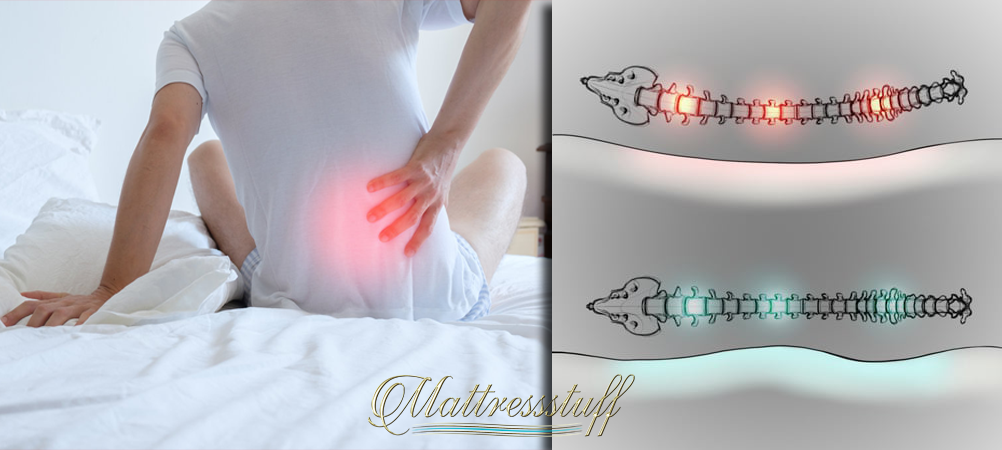
The relationship between your mattress and back pain is a two-way street — a poor mattress can cause new back pain, and an unsupportive mattress can prevent existing back conditions from healing during sleep, when your body performs much of its repair and recovery work. The key to mattress selection for back pain sufferers is maintaining the spine’s natural curves: your lumbar region (lower back) should be supported without being pushed upward, and your thoracic region (upper back) should be cradled without excessive sinking. Medium-firm mattresses (typically rated 6-7 on a 10-point firmness scale) have been shown in clinical research to provide the best outcomes for most back pain sufferers, offering enough support to maintain alignment while providing sufficient contouring to relieve pressure points. However, individual factors including body weight, primary sleeping position, and the specific nature of your back condition all influence which firmness level works best for you.
Complementary Strategies for Sleep-Related Back Pain
While the right mattress is foundational, several complementary strategies can further reduce back pain during and after sleep. Pillow placement plays a crucial role: side sleepers should place a pillow between the knees to maintain hip and pelvic alignment, back sleepers can place a small pillow under the knees to reduce lower back strain, and stomach sleepers (a position generally discouraged for back pain) can minimize strain by placing a thin pillow under the pelvis. Gentle stretching before bed — particularly stretches that target the hip flexors, hamstrings, and lower back — can reduce muscle tension that accumulates during the day and worsens overnight. An adjustable bed base that allows you to elevate your head and knees slightly can relieve pressure on the lower back and is particularly helpful for conditions involving spinal stenosis or degenerative disc disease. If back pain persists despite an appropriate mattress and good sleep habits, consult a healthcare provider to rule out underlying conditions that require specific treatment.