Table of Contents
You’re awake again at 3 AM — not because of noise or stress, but because every point where your body contacts the mattress feels like a bruise. You shift positions, but the new pressure points flare just as fast as the old ones calm down. By morning, you’ve “slept” for 8 hours but feel like you’ve been in a fistfight. For the estimated 4 million Americans with fibromyalgia, this isn’t occasional discomfort — it’s nightly reality.
Fibromyalgia amplifies pain signals from pressure that healthy sleepers don’t even notice. The mattress that feels “fine” to most people creates genuine pain for fibromyalgia sufferers because their central nervous system processes pressure differently. This guide identifies mattresses specifically engineered to minimize those pressure signals — not general “comfortable” mattresses, but options selected for the unique sensitivity profile that fibromyalgia creates.
Top 5 Mattresses for Fibromyalgia
| Mattress | Price (Queen) | Type | Firmness | Best For |
|---|---|---|---|---|
| Tempur-Pedic ProAdapt | $2,799 | Memory foam | Medium (5/10) | Maximum pressure relief |
| Nectar Premier | $849 | Memory foam | Medium (5.5/10) | Best value pressure relief |
| Helix Midnight Luxe | $1,661 | Hybrid | Medium (5.5/10) | Fibro sufferers who sleep hot |
| Purple Original | $1,299 | Hyper-elastic polymer grid | Medium (5/10) | Unique pressure distribution |
| Casper Wave Hybrid | $2,495 | Hybrid | Medium (5/10) | Zoned support for mixed pain |
Every mattress on this list rates medium or softer — and that’s deliberate. Fibromyalgia turns normal contact pressure into pain, so the mattress must conform around your body rather than pushing back against it. Firm mattresses that work for healthy sleepers create pain amplification for fibromyalgia sufferers at every contact point.
Why Fibromyalgia Requires Different Mattress Criteria
Fibromyalgia is a chronic condition characterized by central sensitization — the nervous system amplifies pain signals, making stimuli that wouldn’t bother most people genuinely painful. In the context of sleep, this means contact pressure from the mattress surface registers as pain at the 18 tender points commonly associated with the condition: shoulders, hips, knees, elbows, and along the spine. See our best mattresses for shoulder pain.
Standard mattress selection advice focuses on spinal alignment and general comfort. See our how your mattress impacts spinal health. For fibromyalgia, the priority shifts to pressure distribution — spreading your body weight across the maximum possible surface area to minimize peak pressure at any single point. Memory foam excels here because its slow-response contouring wraps around your body shape rather than creating concentrated pressure zones.


The relationship between mattress quality and overall health outcomes is especially pronounced for chronic pain conditions. A mattress that reduces pressure at tender points can mean the difference between 3 hours and 6 hours of uninterrupted sleep — a gap that cascades into daytime pain levels, cognitive function, and overall quality of life.
Detailed Reviews
Tempur-Pedic ProAdapt — Best for Maximum Pressure Relief
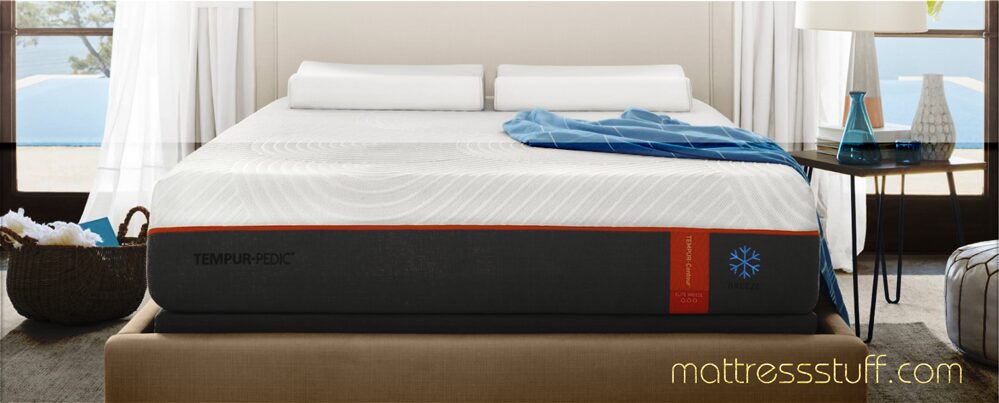
Tempur-Pedic’s proprietary TEMPUR material was originally developed by NASA for astronaut seat cushioning — engineering designed to distribute G-force pressure evenly across the body. In a mattress, this translates to the deepest, most even pressure distribution available. The ProAdapt’s medium setting provides substantial contouring without the “quicksand” feeling of ultra-soft models that make repositioning difficult.
At $2,799, it’s the premium pick on this list. The price is justified for fibromyalgia sufferers specifically because Tempur-Pedic’s material density exceeds competitor memory foams by 30-50%, creating more complete pressure relief at tender points. However, this density also means it sleeps warmer than most alternatives — our cooling guide covers how to mitigate foam heat retention.
Who it’s for: Fibromyalgia sufferers with severe tender point sensitivity who prioritize pressure relief above all else. Who should skip: Hot sleepers — TEMPUR foam retains more heat than gel-infused alternatives.
Nectar Premier — Best Value for Fibromyalgia
The Nectar Premier adds a cooling cover and thicker gel memory foam comfort layer to the standard Nectar platform, providing fibromyalgia-appropriate pressure relief at a mid-range price. The gel memory foam doesn’t match Tempur-Pedic’s conforming depth, but it covers 80% of the performance gap at 30% of the price.
The 365-night trial period is particularly valuable for fibromyalgia sufferers, whose pain levels fluctuate over weeks and months. A 30-night trial may catch a good week, leading you to keep a mattress that performs poorly during flare-ups. A full year of testing accounts for these cycles.
Who it’s for: Budget-conscious fibromyalgia sufferers who need substantial pressure relief without premium pricing. Who should skip: Anyone who needs the absolute deepest contouring available — the ProAdapt outperforms at severe sensitivity levels.
Helix Midnight Luxe — Best Hybrid for Fibromyalgia
All-foam mattresses provide the best pressure relief but trap the most heat. For fibromyalgia sufferers who also deal with temperature sensitivity (common in the condition), the Helix Midnight Luxe offers a compromise: pillow-top cushioning with coil-based airflow underneath. The optional GlacioTex cooling cover adds active temperature management.
The Luxe’s 4-inch comfort system provides adequate contouring for moderate fibromyalgia sensitivity, though it can’t match the all-foam models’ depth of conforming. Our Helix Midnight vs Luxe comparison details where the Luxe’s thicker comfort layer makes the difference.
Who it’s for: Fibromyalgia sufferers who also sleep hot or experience temperature-triggered flare-ups. Who should skip: Those with severe tender point sensitivity who need maximum conforming depth.
Purple Original — Best for Unique Pressure Distribution
Purple’s Hyper-Elastic Polymer grid distributes pressure differently than foam — the grid columns buckle under load, creating a floating sensation that doesn’t push back against tender points. For some fibromyalgia sufferers, this grid technology outperforms memory foam because it eliminates pressure rather than redistributing it.
At $1,299, it’s mid-range pricing for a genuinely different approach to pressure management. The Purple vs Casper comparison explains how the grid technology differs from conventional foam in terms of pressure handling.
Who it’s for: Fibromyalgia sufferers who’ve tried memory foam and still experience pressure pain — Purple’s grid offers a mechanically different solution. Who should skip: Anyone who prefers the slow, enveloping feel of memory foam.
Casper Wave Hybrid — Best for Mixed Pain Locations
The Wave Hybrid’s zoned construction uses softer foam at the shoulders and firmer support at the hips and lumbar region, addressing the varied pain distribution that fibromyalgia creates. If your worst tender points are at the shoulders (common for side sleepers), the Wave’s targeted softness in that zone provides relief that uniform-firmness mattresses can’t match. See our best mattresses for side sleepers.
Who it’s for: Fibromyalgia sufferers with pain concentrated in specific zones (shoulders, hips) rather than distributed evenly. Who should skip: Those with uniform sensitivity across all tender points — zoned support benefits localized pain more than systemic pain.
The Firmness Question for Fibromyalgia
Most fibromyalgia resources recommend “medium-soft” mattresses, and for good reason — softer surfaces distribute pressure more evenly. But there’s a floor to how soft you should go. A mattress softer than 4/10 allows excessive spinal misalignment, which creates a different type of pain: the muscular strain of sleeping in poor alignment. Fibromyalgia sufferers dealing with both pressure sensitivity and back pain need a mattress that balances conforming pressure relief with adequate spinal support. See our best mattresses for back pain.
The 4.5-6/10 firmness range serves most fibromyalgia sleepers optimally. Within that range, choose based on body weight: lighter individuals (under 150 lbs) can go softer (4.5-5) because less weight creates less alignment risk; heavier individuals (over 200 lbs) should stay firmer (5.5-6) to maintain spinal support. The firmness guide explains the weight-to-firmness relationship in detail.
What Most People Get Wrong About Fibromyalgia and Sleep
The biggest mistake is attributing all sleep problems to the mattress when fibromyalgia sleep disruption is multifactorial. The right mattress reduces pressure pain, but fibromyalgia also disrupts sleep architecture — reducing deep sleep stages independent of pain levels. A new mattress can improve the pressure component but won’t fix the neurological sleep disruption. If you’ve optimized your mattress and still experience severe sleep disruption, discuss sleep-specific treatments with your healthcare provider.
The second mistake is choosing the softest mattress possible. Ultra-soft mattresses (2-3/10) feel immediately comfortable but create spinal misalignment that worsens musculoskeletal pain over weeks. Fibromyalgia sufferers often report that ultra-soft mattresses feel great the first week and increasingly painful by week 3 as alignment-related strain accumulates. Medium-soft (4.5-5.5) is the sustainable sweet spot.
The counterintuitive insight: a mattress topper may provide more targeted relief than a new mattress. If your current mattress provides adequate support but creates surface pressure, a 3-inch memory foam topper adds conforming pressure relief at $100-$250 — a fraction of a full mattress replacement. Try this before investing $1,000+ in a new bed.
Sleep positioning also plays a role that the mattress alone can’t address. Understanding how your bed may be contributing to pain helps distinguish mattress-related discomfort from positioning issues. The sleep and health guide explains how mattress quality cascades into broader health outcomes.
Complementary Sleep Setup for Fibromyalgia
The mattress is the foundation, but optimizing the complete sleep environment amplifies pressure relief significantly.
Pillow selection: A pillow that supports neutral head position reduces neck tender point activation. Side sleepers need thicker pillows (4-6″) to fill the shoulder gap; back sleepers need thinner pillows (2-4″). Our pillow guide covers position-specific recommendations.
Temperature control: Many fibromyalgia sufferers experience temperature sensitivity. Cooling sheets in breathable fabrics like bamboo or Tencel reduce temperature-related sleep disruption without medication changes.
Weighted blankets: Research suggests deep pressure stimulation from weighted blankets may reduce pain perception in fibromyalgia by promoting proprioceptive feedback. A 15-20 lb blanket provides enough pressure to engage this mechanism without creating the surface pressure that triggers tender points.
FAQ
Should fibromyalgia sufferers avoid hybrid mattresses entirely?
No — hybrids with thick comfort layers (3″+) provide meaningful pressure relief while adding airflow and responsiveness that all-foam designs lack. The key is ensuring the foam comfort layer is thick enough to prevent your body from engaging the coils below, which create the pushback pressure that triggers tender points. Hybrids with only 1-2 inches of foam comfort are insufficient; those with 3-4 inches perform well for moderate fibromyalgia sensitivity.
Does mattress firmness affect fibromyalgia flare-ups?
Yes — a mattress that’s too firm for your sensitivity level can directly trigger or worsen flare-ups by creating sustained pressure at tender points during 6-8 hours of sleep. However, a mattress that’s too soft creates spinal misalignment that produces muscular pain, potentially mimicking or compounding fibromyalgia symptoms. The optimal firmness reduces pressure without sacrificing alignment — typically 4.5-6/10 depending on body weight and dominant sleep position.
How long should I trial a mattress before deciding if it helps my fibromyalgia?
At least 60-90 days, ideally through multiple flare cycles. Fibromyalgia pain fluctuates over weeks, and a mattress that seems perfect during a low-pain period may prove inadequate during a flare. Long trial periods (100-365 nights) are especially valuable for fibromyalgia because they account for this variability. Evaluate the mattress during your worst days, not your best — that’s the true test of its pressure relief capability.
Is a mattress with “zone support” better for fibromyalgia than uniform firmness?
It depends on your pain distribution. If your worst tender points are concentrated in specific areas (e.g., severe shoulder pain but minimal hip pain), zoned support that’s softer at the shoulders provides targeted relief. If your pain is distributed evenly across all 18 tender points, uniform medium-soft firmness provides more consistent relief than zoning that helps some areas while being firmer than needed at others.
Can an adjustable bed frame improve fibromyalgia sleep quality?
Potentially. Elevating the head reduces acid reflux (common in fibromyalgia), while elevating the legs reduces lower back and hip pressure. The ability to micro-adjust your sleep position without physically repositioning yourself — which triggers the pain of changing contact points — is particularly valuable during severe flare-ups. Our adjustable frame guide covers compatibility with the mattresses listed above.
Should I choose a mattress marketed specifically as “fibromyalgia” rated?
Be skeptical. No mattress is medically certified for fibromyalgia. Brands using fibromyalgia in their marketing are leveraging a medical condition for sales. Instead of trusting marketing labels, evaluate the mattress on objective criteria: comfort layer thickness (3″+), memory foam density (3.5+ lb/ft³), firmness (4.5-6/10), and trial period length (100+ nights). These measurable specifications predict fibromyalgia performance better than any marketing claim.
Final Verdict
The Tempur-Pedic ProAdapt provides the deepest pressure relief available for fibromyalgia sufferers, making it the top recommendation for those with severe tender point sensitivity and the budget to invest in a premium solution. Its TEMPUR material conforms more completely than any competitor foam, creating the widest pressure distribution across tender points.
For budget-conscious buyers, the Nectar Premier at $849 delivers 80% of the ProAdapt’s pressure relief at 30% of the price — an exceptional value for moderate fibromyalgia sensitivity. And for hot sleepers with fibromyalgia, the Helix Midnight Luxe balances foam comfort with coil airflow.
Related: best mattresses for athletes
Related: mattress allergies and hypoallergenic options
Related: how to fix sleep posture