Table of Contents
If the price tag on the mattress you actually want is $300 more than you can spend today, financing feels like the obvious solution — split $1,200 into manageable monthly payments and sleep better starting tonight. But here’s what the “0% APR for 12 months!” banner doesn’t tell you: miss a single payment or fail to pay off the balance before the promotional period ends, and that 0% retroactively becomes 24-30% interest applied to the original purchase price. That “interest-free” mattress just became $300-$500 more expensive than paying cash.
This guide breaks down every major mattress financing option in 2026, explains the fine print that trips up most buyers, and identifies which payment plans genuinely help versus which ones profit from your confusion.
Mattress Financing Options Compared
| Option | Interest Rate | Credit Check | Risk Level | Best For |
|---|---|---|---|---|
| Pay-in-4 (Affirm/Klarna) | 0% | Soft check only | ⭐ Low | Purchases under $600 |
| Brand 0% APR (6-24 mo) | 0% promo, then 12-30% | Hard check | ⭐⭐ Medium | $800-$2,000 purchases |
| Store credit card | Deferred interest (24-30%) | Hard check | ⭐⭐⭐ High | In-store purchases only |
| Personal loan | 6-15% fixed | Hard check | ⭐⭐ Medium | Purchases over $2,000 |
| Credit card (existing) | 15-25% | None (existing card) | ⭐⭐⭐ High if not paid fast | Only if paid within 1-2 months |
The risk spectrum runs from essentially zero (pay-in-4) to genuinely dangerous (store credit cards with deferred interest). Understanding which tier you’re signing up for determines whether financing saves you money through better sleep sooner or costs you hundreds in avoidable interest charges.
Pay-in-4: The Safest Way to Finance a Mattress
Affirm, Klarna, and Afterpay all offer “pay in 4” plans that split your purchase into 4 equal payments over 6-8 weeks with zero interest and no hard credit inquiry. For mattresses under $600, this is the best financing option available — it’s functionally equivalent to paying cash over two months.
How it works: you pay 25% at checkout, then three additional 25% payments every 2 weeks. A $400 mattress becomes four payments of $100. Miss a payment and the service charges a late fee ($10-$25) but does not charge interest. Your credit score is unaffected because the approval uses a soft check that doesn’t appear on your credit report.


The limitation is purchase amount — pay-in-4 plans typically cap at $600-$1,000 depending on your account history with the provider. For mattresses above this range, you’ll need a longer-term financing plan. If you’re looking at budget mattresses under $500, pay-in-4 makes the most sense and carries the least risk.
Brand-Direct 0% APR: The Fine Print Matters
Most major mattress brands offer 0% APR financing through third-party providers (Affirm, Klarna, or Synchrony) for 6-24 month terms. This is how most buyers finance mattresses in the $800-$2,000 range — and it’s where the most common mistakes happen.
How “0% APR” actually works: You’re approved for a specific loan amount, make fixed monthly payments over the promotional period, and pay zero interest as long as you pay off the full balance before the promo ends. The interest rate after the promotional period varies: Affirm charges 0-36% based on creditworthiness, while Synchrony (used by many brick-and-mortar stores) charges 24-30% on any remaining balance.
The deferred interest trap: Some providers — particularly Synchrony — use “deferred interest” rather than true 0% APR. The difference is critical. With true 0% APR, no interest accrues during the promo period. With deferred interest, interest accrues from day one but is waived if you pay the full balance before the deadline. Miss the deadline by even one day, and the entire accumulated interest is added to your balance retroactively. On a $1,500 mattress with 24% deferred interest over 12 months, that’s $360 in back-interest hitting your account at once.
Understanding why premium mattresses cost what they do helps you evaluate whether financing a more expensive option is justified or whether a cash-purchased budget model serves you equally well.
Which Brands Offer the Best Financing?
| Brand | Provider | Best Offer | Interest Type |
|---|---|---|---|
| Nectar | Affirm | 0% APR for 12 months | True 0% (no deferred interest) |
| Casper | Affirm | 0% APR for 12 months | True 0% |
| Helix | Affirm | 0% APR for 12 months | True 0% |
| Purple | Affirm | 0% APR for 24 months | True 0% |
| Saatva | Klarna | 0% APR for 12 months | True 0% |
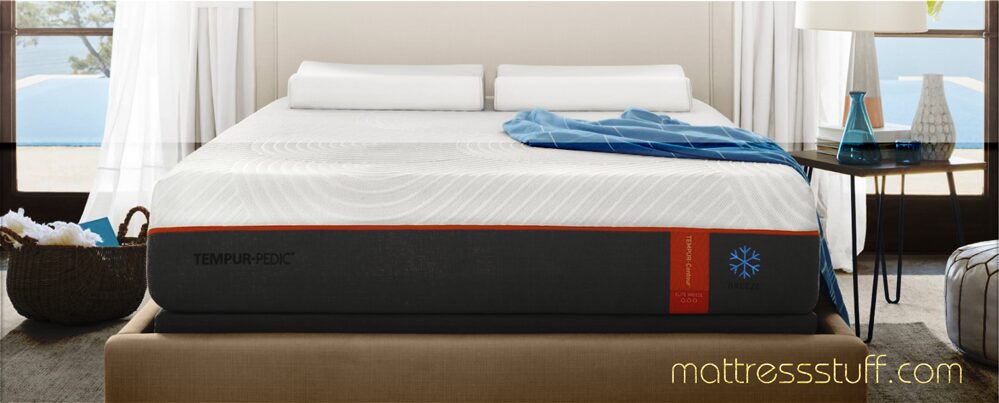
| Tempur-Pedic | Synchrony/Affirm | 0% APR for 60 months | Varies — check terms |
| Mattress Firm | Synchrony | 0% for 72 months (on select) | ⚠️ Deferred interest possible |
| Sleep Number | Synchrony | 0% for 36 months | ⚠️ Deferred interest |
Online bed-in-a-box brands (Nectar, Casper, Helix, Purple) predominantly use Affirm with true 0% APR — the safest structure. Brick-and-mortar retailers and legacy brands more frequently use Synchrony with deferred interest — the riskier structure. Always confirm which type your specific offer uses before signing. For evaluating whether a brand’s price justifies financing, the brand comparison guide helps assess value across manufacturers.
Common Financing Mistakes That Cost Hundreds
Mistake #1: Not setting up autopay. The #1 reason people fail to pay off promotional balances is forgetting a payment. One missed payment can void the 0% promotional rate with some providers. Set up automatic payments the day you’re approved — divide your total by the number of months and set that amount as your recurring payment.
Mistake #2: Financing more than you need. Financing lowers the perceived cost, which encourages upgrading to a more expensive mattress than necessary. If you’d buy a $900 mattress with cash, don’t finance a $1,500 one just because $125/month “feels affordable.” The mattress value guide explains when higher prices deliver proportional quality improvements and when they don’t.
Mistake #3: Ignoring the credit score impact. Hard credit inquiries for financing applications reduce your credit score by 5-10 points for up to 12 months. If you’re planning to apply for a mortgage, car loan, or apartment lease within the next year, a mattress financing inquiry adds unnecessary risk. Pay-in-4 options with soft checks avoid this entirely.
Mistake #4: Assuming the return policy covers financing. If you finance a mattress and return it during the trial period, the refund goes to the financing provider — but the timeline may not align. You could receive the financing bill before the refund processes, creating a temporary balance. Verify the return-to-refund timeline with both the mattress brand and financing provider before purchasing.
The counterintuitive insight: sometimes the smartest financing decision is choosing a cheaper mattress you can pay for outright rather than financing a premium one. A $600 cash-purchased mattress that suits your needs costs exactly $600. A $1,200 financed mattress that you fail to pay off costs $1,500+ after interest. The budget guide proves that excellent sleep doesn’t require premium pricing.
When Financing Makes Sense vs When It Doesn’t
- You can afford the monthly payment comfortably (not stretching your budget)
- The plan is true 0% APR (not deferred interest)
- You set up autopay immediately and will pay the balance before the promo ends
- You’re upgrading from a mattress that causes pain or sleep disruption — better sleep now has measurable health and productivity value
- You’re using pay-in-4 for a purchase under $600 (essentially zero risk)
- You’re financing because the mattress is beyond your budget (not because it’s temporarily inconvenient)
- The plan uses deferred interest and you’re not 100% certain you’ll pay it off on time
- You’re applying for major credit (mortgage, auto loan) within the next 12 months
- You already carry credit card debt — adding mattress debt worsens your financial position
- A cash-purchasable alternative meets your sleep needs equally well
Alternative Strategies If Financing Feels Risky
Buy the budget version now, upgrade later. A $350 mattress like the Lucid or Linenspa provides solid sleep quality for 3-4 years. Use those years to save $50-$100/month for a premium upgrade when you can pay cash. The mattress lifespan guide helps you plan replacement timing.
Use a mattress topper on your current bed. If your mattress still has structural support but lacks comfort, a $100-$200 memory foam topper extends its usable life by 1-2 years while you save for replacement.
Time your purchase to sales. The Memorial Day vs Black Friday comparison shows how to save $200-$400 by buying during major sale events — potentially eliminating the need to finance entirely.
FAQ
Does mattress financing affect my credit score?
Pay-in-4 plans (Affirm/Klarna split payments) use soft credit checks that don’t affect your score. Longer-term financing (6-60 months) requires a hard credit check that temporarily reduces your score by 5-10 points. The account itself can help or hurt your score depending on payment behavior: on-time payments build positive history, while late payments or high utilization damage it. If your financing term exceeds 12 months, the account appears on your credit report as an installment loan.
What happens if I return a financed mattress during the trial period?
The brand processes a refund to your financing provider, not to you directly. The refund typically takes 5-10 business days after the mattress is picked up. During this gap, you may still see a balance on your financing account — do not make additional payments during the refund processing period, as overpayment requires a separate refund request. Verify the refund timeline with both the brand and financing provider at the time of purchase.
Can I pay off 0% APR financing early without penalty?
Yes — all major mattress financing providers (Affirm, Klarna, Synchrony) allow early payoff without prepayment penalties. Paying early is always the best strategy: it eliminates the risk of forgetting a payment, reduces the account’s impact on your credit utilization ratio, and frees up your monthly budget sooner. If you receive a bonus, tax refund, or unexpected income, apply it to your mattress balance immediately.
Is Affirm or Klarna safer for mattress financing?
Both are comparably safe for short-term financing. Affirm shows your total cost upfront with no hidden fees and uses true 0% APR (not deferred interest) for promotional offers. Klarna’s pay-in-4 is similarly transparent. For longer-term financing (12+ months), Affirm’s disclosure practices are slightly more transparent — they explicitly state the post-promotional interest rate before you accept, while Klarna’s longer-term products require more careful reading. Either is significantly safer than Synchrony store cards.
Should I use a credit card instead of mattress financing?
Only if you can pay the balance within 1-2 billing cycles. Credit card interest (15-25%) exceeds most financing rates, making it the most expensive option for any balance carried beyond 30 days. However, credit cards offer purchase protection, extended warranty benefits, and reward points that financing providers don’t. If you have a card with a 0% intro APR offer and can pay it off during that period, it’s functionally equivalent to brand financing with the added benefit of credit card protections.
Do mattress stores offer better financing deals than online brands?
Stores often advertise longer promotional periods (48-72 months vs online’s typical 12-24 months), but these longer terms frequently use deferred interest through Synchrony rather than true 0% APR. The longer the promotional period, the more risk you carry and the more interest accumulates if you fail to pay off the balance. Online brands’ shorter-term Affirm financing is safer despite the tighter payoff timeline. Evaluate the total risk, not just the monthly payment.
Final Verdict
Affirm pay-in-4 is the safest mattress financing for purchases under $600 — zero interest, zero hard credit check, and zero risk if you make your four payments on time. For larger purchases, brand-direct 0% APR through Affirm or Klarna for 12 months is the next-best option, provided you set up autopay and treat the payoff deadline as non-negotiable.
Avoid store credit cards with deferred interest unless you’re confident you’ll pay the full balance before the promotional period expires. The difference between “true 0% APR” and “deferred interest” is the difference between free money and a $300+ surprise charge — and most buyers don’t understand which one they signed up for until it’s too late.