Table of Contents
Every mattress site will tell you that gel memory foam sleeps cooler than traditional memory foam. Here’s why that advice is incomplete: gel-infused foam only drops surface temperature by 1–3°F in most independent tests, and that difference disappears within 20 minutes of lying down as the gel reaches thermal equilibrium with your body. The real cooling difference comes not from the gel itself, but from the foam density, cell structure, and airflow design around it — factors that most “cooling” mattress marketing conveniently ignores.
This guide cuts through the gel hype to identify which mattresses actually solve the heat problem for sleepers who run warm, using construction details and thermal engineering rather than marketing buzzwords to separate genuine cooling performers from rebranded traditional foam with a blue label.
Top 5 Gel Memory Foam Mattresses for Hot Sleepers
| Mattress | Price (Queen) | Cooling Tech | Best For | Rating |
|---|---|---|---|---|
| Nectar Premier Copper | $1,049 | Gel + copper fibers + breathable cover | Best overall cooling value | ⭐ 9.1/10 |
| Tempur-Breeze | $3,999 | PureCool+ phase-change + ventilated TEMPUR | Maximum cooling, any budget | ⭐ 9.4/10 |
| Casper Wave Hybrid Snow | $2,695 | AirScape gel pods + HeatDelete bands | Hot side sleepers needing support | ⭐ 8.9/10 |
| Lucid 10″ Gel Memory Foam | $349 | Gel-infused memory foam + ventilated base | Best budget gel foam | ⭐ 8.2/10 |
| Puffy Lux | $1,549 | Cooling Cloud foam + gel-infused layers | Balanced comfort + cooling | ⭐ 8.5/10 |
These picks represent different price tiers, but they share one thing in common: none relies on gel alone for its cooling claims. Each uses multiple thermal management strategies, which is what actually moves the needle for hot sleepers. Let’s look at what separates genuine cooling technology from surface-level marketing.
How Gel Memory Foam Cooling Actually Works (and Its Limits)
Traditional memory foam traps heat because its dense, closed-cell structure resists airflow. When you lie on it, your body heat has nowhere to go — the foam absorbs it, reaches your skin temperature within 15 minutes, and then insulates you like a thermal blanket. Gel was introduced as a solution: tiny gel beads or swirled gel layers absorb heat faster than foam alone, creating an initial cooling sensation.
The problem is capacity. Gel beads are thermal capacitors — they absorb heat quickly but have a fixed storage limit. Once saturated (usually within 20–30 minutes), they can’t absorb more until they cool down, which requires airflow the dense foam surrounding them doesn’t provide. This is why many gel memory foam mattresses feel cool when you first lie down but warm up as the night progresses — the science of mattress temperature regulation involves more than surface-level solutions.
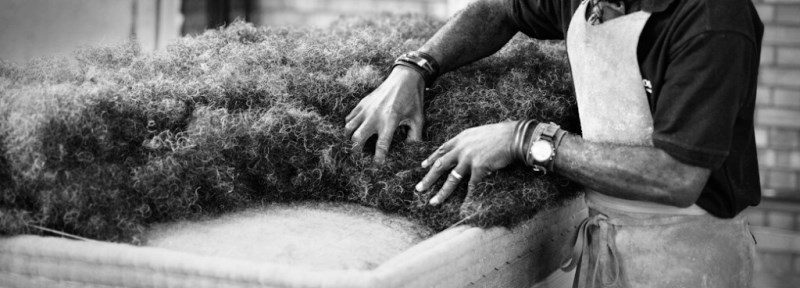
Effective cooling foam designs address this by adding ventilation channels that allow heat to dissipate from the gel continuously, open-cell foam structures that allow air to move through rather than around the material, and phase-change materials (PCMs) that actively absorb and release heat across a wider temperature range. The mattresses in our top 5 use at least two of these strategies — which is why they actually perform, not just promise.
Detailed Reviews: Who Each Mattress Is Built For
Nectar Premier Copper — Best Overall for Hot Sleepers
The Premier Copper layers copper-infused memory foam over a gel memory foam core, creating two separate thermal management systems. Copper conducts heat 400x faster than foam alone, actively pulling warmth away from your body and distributing it across a wider area. The quilted cooling cover adds a third barrier between you and heat buildup.
At $1,049 for a queen, it undercuts most premium cooling mattresses by $500–$2,000 while delivering comparable thermal performance. The trade-off is firmness — it runs medium-firm and doesn’t offer much sink for strict side sleepers under 130 lbs. If that’s your profile, the side sleeper guide covers softer options that still manage heat.
Who it’s for: Back and combination sleepers 130–250 lbs who want effective cooling without luxury pricing. Who should skip: Strict side sleepers wanting deep contouring, or anyone over 300 lbs who needs reinforced support layers.
Tempur-Breeze — Best Luxury Cooling Technology
Tempur-Pedic’s Breeze line represents the most engineered approach to foam cooling on the market. The PureCool+ phase-change material in the cover actively absorbs body heat and releases it as you move or as ambient temperature drops. Below that, ventilated TEMPUR material creates airflow channels through the foam itself — solving the heat-dissipation problem that limits standard gel foam.
The $3,999 price tag is undeniably steep. The cooling performance justifies it only for sleepers who’ve tried mid-range cooling mattresses and still overheat. If you haven’t explored the $1,000–$2,000 range first, start there — our complete cooling mattress guide ranks every tier.
Who it’s for: Hot sleepers who’ve failed with other cooling mattresses and need maximum thermal regulation. Who should skip: Anyone on a budget, or sleepers who only occasionally run warm (seasonal overheating doesn’t justify a $4,000 mattress).
Casper Wave Hybrid Snow — Best for Hot Side Sleepers
The Wave Hybrid Snow combines Casper’s zoned support system with AirScape gel-perforated foam and their proprietary HeatDelete bands — graphite-infused fiber layers that act as heat sinks. For side sleepers, the zoned construction provides softer foam at the shoulders and firmer support at the hips, maintaining alignment while the cooling layers work above.
At $2,695, it sits in the premium-but-not-luxury tier. The hybrid construction with coils adds airflow that pure foam designs lack, which compounds the surface cooling technology. See our best hybrid mattresses for side sleepers. The Wave Snow outperforms most all-foam cooling beds specifically because coils create convection — something worth understanding when you’re comparing construction types.
Who it’s for: Side sleepers 150–230 lbs who need both pressure relief and cooling. Who should skip: Stomach sleepers or those who prefer firm support — the Wave’s softer zones may allow too much hip sink.
Lucid 10″ Gel Memory Foam — Best Budget Option
The Lucid proves that basic gel infusion, when combined with a ventilated foam base, can deliver meaningful cooling improvement at $349. It won’t match the thermal regulation of a $1,000+ mattress, but it drops surface temperature enough to make summer sleeping tolerable without air conditioning on full blast. The bamboo charcoal-infused comfort layer adds mild moisture-wicking properties.
The durability compromise at this price point is real — expect noticeable body impressions by year 3 for average-weight sleepers. But as a transitional mattress or budget pick under $500, it delivers cooling performance that punches above its weight class.
Who it’s for: Budget shoppers who need basic cooling improvement over a traditional foam mattress. Who should skip: Anyone over 200 lbs or expecting 5+ year durability.
Puffy Lux — Best Balanced Comfort and Cooling
The Puffy Lux threads the needle between plush comfort and effective cooling better than most mid-range options. Its Cooling Cloud foam layer uses a larger-cell open structure that ventilates more effectively than standard gel foam, while the Firm Core Support layer prevents the sinking sensation that traps heat against your body.
At $1,549, it’s positioned between the budget and luxury tiers. The cooling isn’t as aggressive as the Tempur-Breeze or even the Nectar Premier Copper, but for sleepers who overheat moderately — waking up warm rather than drenched — the Lux provides enough temperature management alongside genuinely comfortable pressure relief.
Who it’s for: Moderate hot sleepers who prioritize comfort over maximum cooling. Who should skip: Severe hot sleepers who need active cooling technology, or those who prefer a firmer sleep surface.
How to Choose: The Decision Framework
Forget the marketing specifications for a moment. The right gel memory foam mattress depends on three factors that no specs table captures well.
How hot do you actually sleep? If you occasionally wake up warm during summer, a $349 gel foam like the Lucid solves your problem. If you soak through sheets year-round regardless of room temperature, you need active cooling technology — PCMs, copper, ventilated channels — which starts around $1,000. Matching your cooling investment to your actual heat level prevents both underspending and massive overspending.
What’s your body weight? Heavier sleepers compress foam deeper, reducing the airflow channels that allow heat to escape. If you’re over 200 lbs, prioritize mattresses with ventilated layers and coil support bases over all-foam designs. The couples who sleep hot guide covers this dynamic in depth for shared beds.
Do you need cooling just from the mattress? A gel memory foam mattress paired with heat-trapping sheets negates half the cooling benefit. Breathable sheet materials like bamboo and Tencel can improve your sleep temperature as much as upgrading the mattress itself, at a fraction of the cost.
What Most People Get Wrong About Gel Memory Foam
The biggest misconception is that more gel means cooler sleep. A mattress with 30% gel infusion doesn’t sleep measurably cooler than one with 15% gel infusion — because the thermal capacity plateau hits at relatively low gel concentrations. What matters is what surrounds the gel: open-cell structure, ventilation holes, and breathable cover materials that let the gel release absorbed heat.
The second mistake is ignoring mattress breathability as a whole-system property. A gel foam comfort layer sitting on a dense polyfoam base with no airflow channels will still trap heat — the gel manages surface temperature while the base creates a thermal oven underneath. The mattresses that actually sleep cool treat airflow as a full-stack engineering problem, not a surface feature.
Here’s the counterintuitive insight: adding a cooling mattress topper to a non-gel mattress often outperforms buying a cheap gel mattress. A $150 gel-infused topper on a firm, breathable innerspring delivers better thermal performance than a $400 all-gel-foam mattress, because the innerspring base provides the airflow that gel needs to function.
How Gel Memory Foam Compares to Other Cooling Technologies
Gel foam isn’t the only solution for hot sleepers, and in some cases, it’s not even the best one. Hybrid mattresses with coil bases inherently sleep cooler because coils create air chambers — our main mattress guide ranks hybrid options alongside all-foam picks. Latex foam naturally sleeps cooler than memory foam thanks to its open-cell pin-core structure, though it lacks the contouring pressure relief that memory foam provides.
Phase-change materials (PCMs) represent the next generation of cooling technology — they actively absorb and release heat rather than passively conducting it. The Tempur-Breeze uses PCMs in its cover layer, which is a major reason it outperforms gel-only designs. Expect PCMs to trickle down to mid-range mattresses within the next 2–3 years as manufacturing costs decrease.
For the most severe cases of overheating, active cooling systems like the BedJet or ChiliSleep pad bypass the mattress entirely by circulating temperature-controlled air or water. These aren’t mattresses — they’re climate control for your bed — but they solve heat problems that no passive foam technology can match. Combining a breathable mattress with an active cooling pad is the nuclear option for chronic hot sleepers, and the memory foam under $1000 guide includes options that pair well with these systems.
FAQ
Does gel memory foam lose its cooling ability over time?
Yes, but not as dramatically as marketing fears suggest. The gel beads themselves maintain thermal conductivity for the life of the mattress. What degrades is the foam structure around them — as cells break down and compress over 3–5 years, airflow decreases and heat gets trapped regardless of gel content. You’ll notice the mattress sleeping warmer around the same time you notice body impressions forming, usually between years 3 and 5 for mid-range models.
Can I make a regular memory foam mattress cooler without replacing it?
Absolutely, and you should try this before buying a new mattress. A gel-infused topper ($100–$250) adds a cooling layer without the cost of full replacement. Breathable bamboo or Tencel sheets drop perceived temperature by 2–4°F. A bed fan or cooling pad provides active airflow. Combined, these three upgrades cost $200–$400 and can match the cooling improvement of upgrading to a mid-range gel mattress, especially if your current mattress still provides good support.
Why do some gel memory foam mattresses still sleep hot despite marketing claims?
Because gel alone is a band-aid, not a solution. A gel-infused layer sitting on dense, closed-cell polyfoam with a polyester cover creates a heat sandwich — the gel manages surface temperature briefly, but the system has no way to dissipate accumulated heat. Genuine cooling mattresses combine gel with open-cell foam, ventilation channels, and breathable covers. If a mattress only mentions “gel-infused” without describing its airflow design, the cooling claims are likely exaggerated.
Is copper-infused foam actually better than gel for cooling?
Copper conducts heat roughly 400 times faster than polyurethane foam, while gel improves conductivity by only 2–3x. In theory, copper is dramatically superior. In practice, the copper content in mattress foam is typically 1–5% by weight — enough to improve heat transfer measurably but not enough to match a solid copper surface. Copper and gel work best together, which is why the Nectar Premier Copper uses both. Copper alone in a dense foam matrix improves cooling moderately — gel alone improves it marginally — but the combination creates multiplicative benefits.
What room temperature should I maintain for the best gel foam performance?
Gel memory foam performs optimally when ambient room temperature stays between 65–72°F. Below 60°F, memory foam stiffens and loses contouring ability — it literally becomes harder to compress. Above 75°F, the gel reaches thermal saturation faster and loses cooling effectiveness sooner. If you keep your bedroom at 68°F (the sleep science sweet spot), a quality gel foam mattress should maintain comfortable surface temperature for 4–6 hours before heat buildup becomes noticeable.
Should hot sleepers avoid memory foam entirely and switch to innerspring?
Not necessarily. Modern gel foam with proper ventilation sleeps within 2–3°F of a comparable innerspring for most body types. The exception is sleepers over 250 lbs — at higher compression depths, foam traps significantly more heat than coil systems regardless of gel content. If you’re in that weight range and overheating is your primary complaint, a hybrid (foam comfort layer + coil support) gives you memory foam’s pressure relief with innerspring’s natural airflow. Pure innerspring sleeps coolest but sacrifices the pressure relief that makes memory foam popular.
Final Verdict
The Nectar Premier Copper wins our top recommendation because it delivers the best cooling-to-price ratio with its triple-technology approach — gel, copper, and breathable cover working together rather than relying on any single cooling feature. At $1,049, it costs less than most single-technology competitors while outperforming them in sustained temperature management.
For budget shoppers, the Lucid at $349 proves cooling doesn’t require a premium budget. For sleepers who’ve tried everything and still overheat, the Tempur-Breeze at $3,999 represents the ceiling of what passive foam cooling can achieve — and it’s worth every dollar if mid-range options have failed you.
Related: best firm mattresses for stomach sleepers
Related: Twin XL mattresses for college dorms
Related: best mattresses for heavy people
Related: cooling vs regular pillow comparison
Related: best mattresses for athletes